Why Minor Car Accidents Can Still Cause Serious Injuries
Introduction
If you've been involved in a minor car accident in New Mexico, you might assume that little vehicle damage means you escaped injury. However, even low-speed collisions can cause serious health problems that aren't immediately obvious. This article explains the hidden risks of minor accidents, what injuries to watch for, and how New Mexico accident victims can protect their health and legal rights.
Key Takeaways
Low-speed fender benders under 25 mph can cause whiplash, sprains, strains, and disc injuries, which are common injuries that may have long-lasting effects on health and quality of life—even when vehicle damage appears minimal.
One of the most harmful misconceptions is that minor vehicle damage means no injuries occurred; in reality, severe injuries can still result from minor accidents.
Symptoms from minor car accidents often do not appear for 24–72 hours due to adrenaline masking pain signals.
Insurance companies routinely downplay minor accidents and may use the lack of visible damage to deny or reduce your claim.
Seeking immediate medical attention and documenting everything protects both your health and your legal rights.
If you were hurt in a low-speed crash anywhere in New Mexico, call Shekter Rosete Law, PC at (505) 216-2510 or message us online for a free consultation.
The Reality of "Minor" Car Accidents in New Mexico
Every week across New Mexico, drivers walk away from low-speed collisions thinking they escaped injury. A parking lot bump at a grocery store in Albuquerque. A rear-end collision at a red light on Coors Blvd. Stop-and-go traffic on I-25 or I-40 that ends with a sudden crunch. These fender benders happen constantly in Santa Fe, Las Cruces, Rio Rancho, Roswell, Farmington, Hobbs, and Taos.
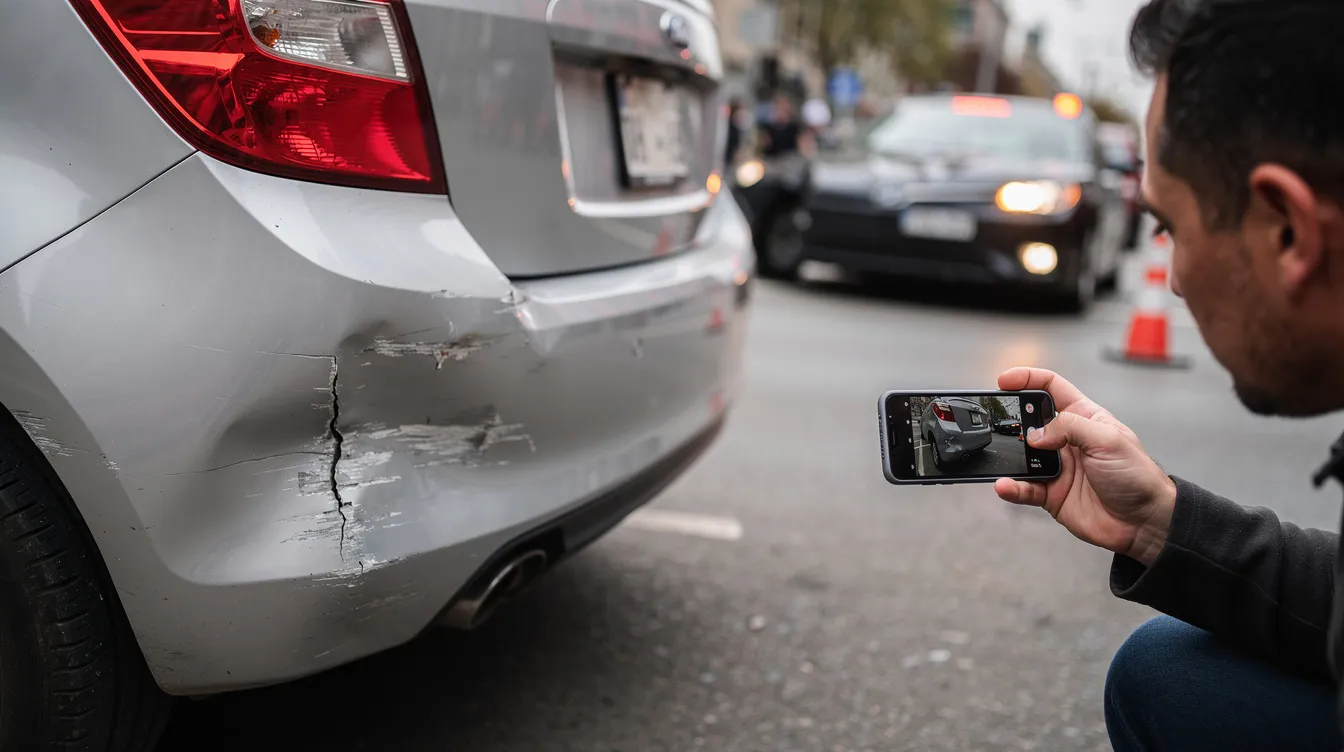
The term "fender bender" often leads to a dismissive attitude toward these accidents, but medical evidence shows that even low-speed impacts can still result in serious injuries. Soft tissue injuries—such as sprains, strains, and whiplash—can occur even when there is little or no visible vehicle damage, because the body absorbs forces that may not be immediately apparent. Soft tissue injuries refer to damage to muscles, ligaments, and tendons, and are among the most common injuries in car accidents. The severity of an injury is not always related to the amount of vehicle damage; even a car with minimal or no visible damage can transmit enough force to cause significant harm to the occupants.
Modern vehicles are engineered with bumpers and crumple zones that absorb impact energy without showing visible damage. The problem is that this energy often transfers directly into the human body—straining the neck, back, and brain even when the car only shows a small dent or scratched bumper.
Attorneys Jamison Shekter and Mish Miera-Rosete at Shekter Rosete Law, PC have represented many clients who felt fine after a collision and later discovered serious injuries requiring months of treatment. If you were hurt in any low-speed crash, call (505) 216-2510 for a free case evaluation.

The Nature of Low-Speed and Minor Impact Collisions
Low-speed car accidents typically occur at speeds between 10 and 30 miles per hour. These collisions—often seen as crashes under 20–30 mph—happen constantly in New Mexico. Common examples include:
Rear-end crashes at intersections along Coors Blvd or Central Ave
Slow-moving sideswipes in downtown Albuquerque or Santa Fe traffic
Parking lot impacts at shopping centers
Stop-and-go collisions during rush hour on I-25 or I-40
Despite minimal vehicle damage, low-speed car accidents can still result in significant injuries due to the sudden forces experienced by the body. Even at these low speeds, the human body experiences rapid acceleration and deceleration. In a fraction of a second, muscles, ligaments, discs, and joints absorb sudden forces they were never designed to handle.
Here's what makes low-speed car accidents particularly dangerous: modern safety systems like airbags and seatbelt pretensioners often do not deploy below threshold speeds of 10–25 mph, depending on the vehicle model. This leaves occupants more exposed to whiplash injuries and soft tissue damage.
There's also a disconnect between what you see and what actually happened. A car with an intact bumper may have a bent frame or broken sensor underneath. Similarly, a person who walks away from the scene may have torn ligaments, disc injuries, or mild traumatic brain injuries that don't show on initial X-rays.
In many of Shekter Rosete Law, PC's car accident cases, the photos look like minimal vehicle damage, but medical records confirm significant injuries requiring long-term treatment.
Why Minor Car Accidents Still Cause Serious Injuries
The human body is simply not designed to absorb sudden forces—even at speeds as low as 10–15 mph. A common misconception is that low-speed accidents cannot cause significant injuries; however, the sudden forces involved can lead to serious harm, particularly to the neck and back. When you're unprepared for impact, the results can be severe, with neck injuries such as whiplash and soft tissue damage being especially common.
The Biomechanics of Whiplash
In a rear-end collision, the torso is thrust forward by the seat while the head lags behind due to inertia. This causes the neck to hyperextend (up to 70–80 degrees) before snapping forward. Research shows that neck forces can exceed 10–15 g's (gravitational forces) at impact speeds as low as 8–15 mph—far beyond what the cervical spine experiences in daily life.
Common symptoms of whiplash and neck injuries include neck pain, stiffness, headaches, dizziness, and reduced range of motion. Recognizing these common symptoms is crucial for timely evaluation and treatment.
Spine and Disc Injuries
During a low-speed collision, the spine absorbs compression and shear forces that can reach 3,000–5,000 Newtons. Intervertebral discs may bulge or herniate, compressing nerve roots and causing chronic back pain, shooting leg pain, or numbness that develops over time. While broken bones are easier to detect with standard X-rays or imaging, soft tissue and disc injuries often require advanced diagnostics to identify.
Brain Injuries Without Head Contact
Concussions and mild traumatic brain injuries can occur even without direct head impact. The brain accelerates within the skull during sudden stops, causing axonal shearing and microvascular damage. CDC data indicates that mild TBIs account for 75–90% of traumatic brain injuries from motor vehicle crashes.
Pre-Existing Conditions Amplify Risk
Individuals over 50, those with degenerative disc disease, or people with prior injuries experience higher injury severity from minor car accidents. Reduced tissue elasticity makes the body less resilient to sudden forces, and conditions common among New Mexico workers and retirees can turn a fender bender into a life-changing event.
Common Injuries from Low-Speed and Fender Bender Crashes
Many clients throughout Albuquerque, Las Cruces, and across New Mexico suffer these injuries after accidents that initially seemed minor. Even minor injuries can lead to complications if left untreated. For example, soft tissue injuries from low-speed crashes can result in inflammation and reduced mobility that may worsen in the days following a crash.
Whiplash Injuries
Neck pain and stiffness
Reduced range of motion
Headaches and sleep problems
Symptoms typically appear 24–72 hours after rear-end collisions
Studies confirm whiplash-associated disorders occur in 20–40% of low-speed crashes under 20 mph.
Soft Tissue Injuries
Sprains and strains to the back, shoulders, and knees
Muscle tears causing inflammation and bruising
May not appear on X-rays but require physical therapy or injections
Untreated cases can progress to fibrosis and chronic pain in 10–20% of victims
Concussions and Mild Traumatic Brain Injuries
Dizziness and brain fog
Sensitivity to light or noise
Mood changes and difficulty concentrating
Can affect work, school, and driving for months
Disc Injuries and Back Problems
Shooting leg pain from disc herniations
Numbness or tingling in extremities
Often discovered only after MRI or specialist evaluation
May require injections or surgery in severe cases
Joint Injuries
Shoulder, hip, and knee damage from bracing or striking the dashboard
Labral tears, meniscal damage, and ligament sprains
May require orthopedic care or arthroscopy
Even small cuts, bruises, and abrasions from seatbelts or glass should be documented—they help demonstrate the force of impact and overall physical injuries sustained.

Delayed Symptoms and Long-Term Consequences
After a collision on a New Mexico roadway, adrenaline and shock often mask immediate pain. Many accident victims decline ambulances because they feel fine at the scene, only to discover hidden injuries days later.
The 24–72 Hour Window
This is when symptoms worsen for most people:
Neck stiffness and headaches develop
Back pain intensifies
Dizziness and cognitive fog emerge
Shoulder pain and reduced mobility appear
A 2018 study found that 52% of low-speed crash occupants sought medical care after 48 hours—and those who delayed treatment had significantly worse outcomes, with chronic pain affecting 25% compared to just 10% for those who received early treatment.
Long-Term Consequences
Left untreated, soft tissue and disc injuries can progress to:
Chronic pain lasting more than 6 months
Reduced mobility and sleep disturbances
Long-term reliance on medication
Accelerated spinal degeneration
Real-World Impact on Daily Life
These injuries affect everything: missed work at Los Alamos, inability to care for children in Rio Rancho, difficulty performing physical jobs in the oilfields around Hobbs. Lost wages and lost income compound the medical bills that pile up.
Early diagnosis and consistent medical treatment reduce the risk of long-term disability. If you're experiencing delayed symptoms or symptoms worsen after a crash, call Shekter Rosete Law, PC at (505) 216-2510 or send a secure message through our online contact form right away.
How Insurance Companies Treat "Minor" Accident Claims in New Mexico
Insurance companies routinely treat low-speed crashes as low-value personal injury claims—regardless of actual injury severity. In these cases, expert testimony is often used to establish the cause and extent of injuries and to counter skepticism from insurance companies.
Common Insurance Company Tactics
"No damage, no injury": Arguing minimal vehicle damage means you couldn't have been hurt
Blaming pre-existing conditions: Claiming your pain is from age or prior problems, not the crash
Rushing recorded statements: Pressuring you to speak before all symptoms appear, then using your words against you
Delaying payment: Waiting 60–90 days to pressure settlements at 40–60% below fair value
Excessive documentation requests: Overwhelming you with paperwork to discourage pursuing your claim
These tactics are documented in insurance industry training materials that instruct adjusters to minimize low-speed claims by 30–50%.
What You Should Avoid
Don't sign releases before understanding your full injuries
Don't accept quick lowball offers
Don't give detailed recorded statements without legal guidance
Shekter Rosete Law, PC regularly challenges these tactics with medical evidence, expert opinions, and accident reconstruction when necessary.
Proving Serious Injuries After a Minor Car Accident
Successfully proving car accident injuries from a low-speed crash requires careful documentation and sometimes advanced technology. While many people picture high-speed collisions as the main cause of serious injuries, and high-speed collisions are often associated with dramatic, high-impact events, even minor accidents at low speeds can result in significant harm.
Essential Evidence
Scene documentation: Photos of both vehicles, skid marks, intersection layout
Police reports: New Mexico requires reports for crashes over $500 in damage or any injury
Witness statements: Contact information from anyone who saw what happened
Medical records: Hospital, urgent care, specialist, and physical therapy documentation
Advanced Proof Methods
Type |
Purpose |
|---|---|
MRI and CT scans |
Reveals soft tissue damage, disc herniations, brain injuries |
Specialist evaluations |
Neurologists, orthopedists, and pain doctors provide objective findings |
Event data recorders |
Vehicle "black box" data showing speed and impact forces |
Biomechanics experts |
Demonstrate that significant forces occurred despite low impact speed |
Engineering analysis |
Reconstruct the accident to show actual delta-V (change in velocity) |
Shekter Rosete Law, PC works with medical and technical experts when needed to prove the connection between the collision and the client's injuries.
Following all medical advice, keeping appointments, and saving detailed records strengthens both health outcomes and your legal claim.
Steps to Protect Your Health and Legal Rights After a Low-Speed Crash
What you do in the first hours and days after any accident in New Mexico affects both your recovery and your legal options.
At the Scene
Move to safety if possible
Call 911 and request police response
Exchange insurance and contact information with other drivers
Take photos of all vehicles, the scene, and any visible injuries
Get contact information from witnesses
Request the police report number
In the Following Days
Seek medical attention immediately—the same day if possible, at an ER, urgent care, or your primary doctor
Be honest and thorough about all pain and symptoms, no matter how minor
Follow medical advice and keep all follow-up appointments
Save all receipts and maintain detailed records
Avoid social media posts about the crash or your injuries—insurance companies monitor accounts
Contact an Attorney Early
Speaking with an experienced team before the insurance adjuster can prevent:
Damaging recorded statements
Missed deadlines under New Mexico law
Evidence spoliation (vehicle data recorders have 30-day preservation windows)
Accepting settlements far below fair compensation
Call Shekter Rosete Law, PC at (505) 216-2510 or reach out through our online contact form for a free, confidential consultation.
How Shekter Rosete Law, PC Helps Victims of "Minor" Car Accidents
Shekter Rosete Law, PC is a New Mexico personal injury firm based in Albuquerque, founded by attorneys Jamison Shekter and Mish (Mixcoatl) Miera-Rosete.
Practice Areas
The firm handles cases involving:
Car accidents
Motorcycle accidents
Truck accidents
Personal injury
Wrongful death
Insurance bad faith
Civil rights
Medical malpractice
Nursing home injury and abuse
Statewide Representation
Shekter Rosete Law, PC represents individuals across New Mexico, including Albuquerque, Santa Fe, Las Cruces, Rio Rancho, Roswell, Farmington, Hobbs, Taos, and surrounding communities.
The Firm's Approach
In low-speed crash cases, the firm:
Listens carefully to understand your story and pain and suffering
Reviews all medical records and treatment documentation
Consults medical and technical experts when needed
Pushes back against insurers who dismiss soft tissue and brain injuries
Handles all communications with insurance companies
Consultations are free, and cases are typically handled on a contingency fee basis—meaning you generally pay no attorney's fee unless there is a recovery. Specific terms are explained in the fee agreement.
Don't let anyone tell you that your accident injuries aren't real. Call (505) 216-2510 today or send a message through our online contact form to discuss your options.
Frequently Asked Questions About Minor Car Accidents and Serious Injuries
How long after a minor car accident can symptoms appear?
Symptoms such as neck pain, headaches, back stiffness, and dizziness commonly appear 24–72 hours after a low-speed crash. However, some issues—like disc injuries or post-concussion problems—can take weeks to fully develop. The delayed onset happens because adrenaline and endorphins suppress pain signals immediately after impact.
New Mexico accident victims should seek medical attention as soon as any new or worsening symptoms appear, even if they initially felt fine at the scene. Documenting the timing in medical records helps link injuries to the crash for insurance and legal purposes.
Should I see a doctor even if I feel okay after a fender bender?
Yes. It is strongly recommended to get checked by a medical professional after any collision, including low-speed accidents and parking lot crashes. Approximately 40–60% of crash victims report no immediate pain yet develop significant symptoms later.
Early evaluation can detect injuries before they become chronic problems and creates timely documentation that supports any future claim. Bring up all possible symptoms—even mild headaches or slight neck tightness—so they are recorded from the beginning.
Can I still have a claim if my car only has minor damage?
Under New Mexico law, the extent of vehicle damage does not determine whether you can pursue an injury claim. What matters is whether you were hurt due to another driver's negligence. Many severe soft tissue, joint, and brain injuries occur in collisions that leave only scratched bumpers or a small dent.
Research shows that modern bumpers can withstand 5–10 mph impacts without visible deformation, meaning the lack of damage actually indicates that more energy transferred to your body. If you have questions about your situation, contact Shekter Rosete Law, PC at (505) 216-2510 or use the online contact form.
What if the insurance adjuster says my injuries can't be serious?
Insurance adjusters often downplay injuries from minor accidents, arguing that a person could not be badly hurt when there's little vehicle damage. This position contradicts medical science and biomechanical research showing that occupant injury can be significant even at very low speeds.
Do not accept the adjuster's opinion as final. Do not sign releases or accept low offers without understanding the full extent of your injuries. An experienced New Mexico car accident lawyer can review medical evidence, consult experts, and challenge unfair assumptions.
How soon should I contact a lawyer after a minor accident in New Mexico?
Contact a lawyer as soon as possible after any accident that causes pain, emotional trauma, lost time from work, or ongoing medical treatment—even if the crash seemed minor. New Mexico's statute of limitations gives you three years for most personal injury claims, but evidence degrades quickly. Vehicle event data recorders may overwrite within 30 days, and memories fade.
Early legal help protects evidence, prevents damaging statements to insurers, and ensures all deadlines are met. Call Shekter Rosete Law, PC at (505) 216-2510 or reach out via the online contact form to discuss your situation at no cost.