What Happens If At Fault Driver Has Minimum Insurance In New Mexico?
If you’re wondering what happens if the at-fault driver has only minimum insurance in New Mexico, this page explains your options and what to expect. This guide is for New Mexico drivers and accident victims who want to understand their rights and options when the at-fault driver has only the minimum required insurance. We’ll cover what the law requires, what happens when damages exceed those limits, and how you can protect yourself.
Getting hit by another driver is stressful enough. Discovering that the at-fault driver carries only minimum insurance in New Mexico can turn a difficult situation into a financial nightmare.
Quick Answer: When the At-Fault Driver’s Insurance Isn’t Enough
Minimum insurance in New Mexico means the driver carries only the legally required minimum liability coverage: $25,000 for bodily injury per person, $50,000 per accident, and $10,000 for property damage (see Facts 1, 2). If damages exceed these limits, the at-fault driver is personally liable for the remaining costs, and victims may need to pursue the driver's assets or rely on their own underinsured motorist coverage (see Facts 3, 4, 5, 6, 7, 8).
New Mexico requires drivers to carry only 25/50/10 in liability coverage—$25,000 per person for bodily injury, $50,000 total per accident, and $10,000 for property damage. This is often far too low after a serious motor vehicle accident.
Here’s a concrete example: You suffer a broken leg, concussion, and back injuries requiring surgery. Your medical bills climb past $100,000. The at-fault driver has only the minimum $25,000 per person in coverage. That leaves you facing a $75,000+ unpaid balance—and the at-fault driver’s insurance company has no obligation to pay a penny more.
Your options typically include:
-
Collecting all available liability limits from the at-fault driver’s insurance policy
-
Turning to your own uninsured motorist coverage or underinsured motorist coverage
-
In some cases, suing the at-fault driver personally or pursuing other liable parties (employers, bar owners, vehicle manufacturers)
These rules apply everywhere in New Mexico—Albuquerque, Las Cruces, Rio Rancho, Santa Fe, Roswell, Farmington, Hobbs, Taos, and rural communities throughout the state.
If you were hit by a driver with minimum insurance, call Shekter Rosete Law, PC at (505) 216-2510 or message us online for a free case review.
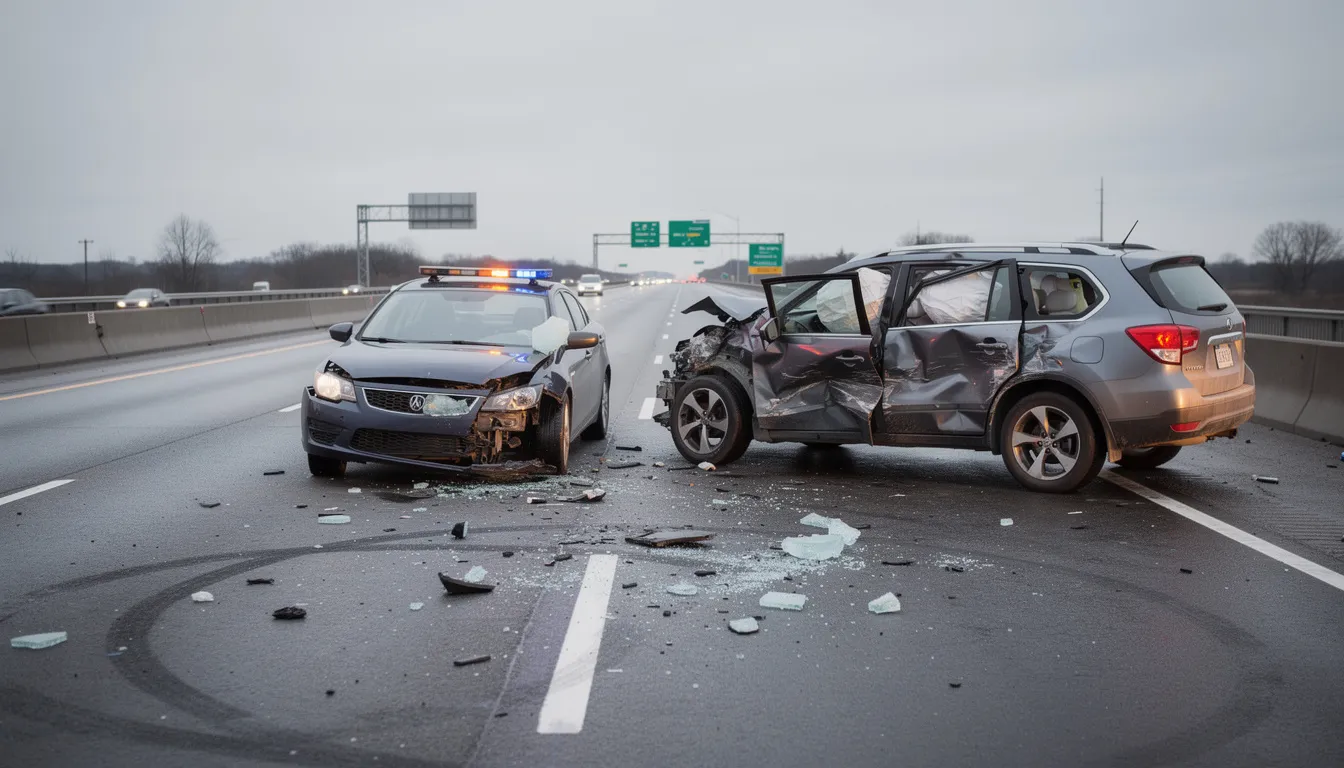
New Mexico Minimum Liability Insurance Requirements (25/50/10)
Understanding what the law actually requires helps explain why so many crash victims end up undercompensated.
New Mexico’s minimum auto liability insurance requirements under N.M. Stat. Ann. § 66-5-215 break down as follows:
|
Coverage Type |
Minimum Amount |
|---|---|
|
Bodily injury per person |
$25,000 |
|
Bodily injury per accident (total) |
$50,000 |
|
Property damage per accident |
$10,000 |
This liability policy pays for other people’s losses when you cause a collision—not your own injuries or vehicle damage.
The problem? These limits haven’t kept pace with modern medical costs or vehicle values.
Medical bills add up fast. A single emergency room visit at UNM Hospital in Albuquerque or Christus St. Vincent in Santa Fe can easily exceed $25,000 if you need imaging, surgery, or even a short admission. Severe injuries requiring helicopter transport, ICU stays, or multiple surgeries routinely generate bills in the $200,000-$500,000 range.
Property damage coverage falls short too. The minimum $10,000 in property damage liability won’t come close to covering a newer truck, SUV, or commercial vehicle. Industry data shows average repair costs for even moderate collisions now run $15,000-$20,000.
Drivers in New Mexico can—and should—purchase higher liability limits. But many don’t. And that leaves injured parties scrambling after a crash.
How Fault Works in New Mexico Car Accidents
New Mexico is a fault state, meaning the driver who caused the car accident is legally responsible for the damages caused. The state also uses pure comparative negligence rules that affect how much compensation you can recover.
The at-fault driver (and their insurer) owes you:
-
Medical bills and future medical care
-
Lost wages and reduced earning capacity
-
Pain and suffering
-
Property damage to your insured vehicle
However, your recovery can be reduced by your own percentage of fault. If you’re found 20% at fault for the accident, your damages are reduced by 20%. This is why establishing clear fault matters so much.
Evidence used to prove fault includes:
-
Police crash reports
-
Witness statements
-
Vehicle damage patterns
-
Traffic camera footage
-
Cell phone records
-
Expert accident reconstruction
Insurance companies routinely dispute fault or push a larger percentage of blame onto the injured person to reduce payouts. They’re not on your side—even when their own insured clearly caused the collision.
This is why having Albuquerque-based trial lawyers like Jamison Shekter and Mish Miera-Rosete can be critical in contested-fault cases. Call (505) 216-2510 or message us online for help proving fault and protecting your claim.
What “Underinsured” Really Means When the At-Fault Driver Has Minimum Coverage
A driver is “underinsured” when their liability limits aren’t enough to cover the full value of your losses. In practice, a driver carrying only New Mexico’s minimum limits (25/50/10) is almost always underinsured in any crash causing:
-
Broken bones requiring surgery
-
Traumatic brain injury
-
Spinal cord injuries
-
Multiple fractures
-
Wrongful death
Consider this real-world scenario:
You’re driving on I-25 near Albuquerque when an underinsured driver rear-ends you at high speed. Your injuries result in:
-
$150,000 in medical expenses
-
$40,000 in lost wages
-
$25,000 in future care costs
Total damages: $215,000
The at-fault driver has minimum coverage: $25,000.
Once their liability insurance carrier tenders that $25,000 policy limit, they have no further legal obligation to pay—even though your losses are nearly nine times higher.
This gap creates tremendous emotional and financial stress for families across New Mexico, particularly in rural counties where access to specialized medical care already requires traveling significant distances.
This is precisely when your own motorist coverage (UM/UIM), MedPay, health insurance, or other potential defendants become crucial to filling the gap.
Uninsured/Underinsured Motorist (UM/UIM) Coverage in New Mexico
New Mexico law strongly favors UM/UIM coverage. Insurers must offer it, and unless you validly rejected it in writing (with that rejection attached to your policy), uninsured underinsured motorist coverage in at least the minimum limits is generally read into your policy by law.
Uninsured motorist coverage is designed to protect individuals from financial loss when involved in an accident with an uninsured driver.
UM/UIM coverage is designed to put you in roughly the same position you would have been in if the at-fault driver carried adequate liability coverage.
Many New Mexico drivers don’t realize they have this coverage because:
-
They never received a clear explanation from their insurance agent
-
They signed paperwork at closing without understanding it
-
Their policy declarations page is confusing
Insurance companies must provide information about the costs of UM/UIM coverage to policyholders.
Here’s the critical point: UM/UIM claims are made against your own insurer, but they’re still adversarial. Your insurance company may minimize your injuries, dispute the value of your claim, or delay payment—just like the at-fault driver’s carrier would.
In New Mexico, stacking is a default entitlement with regard to all individual vehicles covered under a policy, and all individuals listed as the named insured in a policy are eligible to participate in stacking rights for UM/UIM coverage.
Shekter Rosete Law has extensive experience handling insurance bad faith and complex UM/UIM disputes throughout New Mexico. Call (505) 216-2510 or message us online to have your policy reviewed at no charge.
Driving History and Insurance Rates: How Your Record Affects Coverage and Costs
Your driving history is one of the most significant factors insurance companies consider when setting your car insurance rates in New Mexico. Every accident, speeding ticket, or moving violation on your record signals increased risk to insurers, which can lead to higher premiums or even difficulty securing coverage. On the other hand, a clean driving record can help you qualify for lower rates and better coverage options.
In New Mexico, all drivers are required by law to carry minimum liability coverage—$25,000 for bodily injury per person, $50,000 per accident, and $10,000 for property damage. However, if your driving history includes prior accidents or traffic violations, insurance carriers may view you as a higher risk. This can result in increased costs for even the minimum liability coverage, and in some cases, insurers may decline to renew your policy or offer only limited coverage options.
The Importance of UM/UIM Coverage in New Mexico
Uninsured motorist coverage and underinsured motorist coverage are especially important for drivers in New Mexico, where not every motorist carries adequate insurance. These types of motorist coverage protect you if you’re involved in an accident with an uninsured or underinsured driver, helping to pay for medical bills and property damage when the at-fault driver’s insurance falls short. New Mexico law requires insurance companies to offer uninsured and underinsured motorist coverage, and you can only decline this protection by signing a written waiver.
Maintaining a clean driving record is the best way to keep your car insurance affordable and ensure you have access to the right coverage. Safe driving habits, such as obeying traffic laws and avoiding distractions, can help you avoid accidents and claims that might otherwise raise your rates. Some drivers also benefit from taking defensive driving courses or installing safety features in their vehicles, which can demonstrate to insurance agents and carriers that you’re committed to reducing risk.
It’s also important to remember that your driving history isn’t the only factor affecting your insurance rates. The type of vehicle you drive, your location in New Mexico, and even your age and gender can influence your premiums. Working with an experienced insurance agent can help you compare coverage options and find a policy that fits your needs and budget.
If you’re ever involved in an accident, your driving history may also impact your ability to seek compensation—especially if the at-fault driver has only minimal coverage. In these situations, uninsured underinsured motorist coverage can be a financial lifeline, helping to pay for medical costs and property damage that exceed the at-fault driver’s policy limits. If necessary, you may also have the right to pursue legal action to recover additional compensation.
Ultimately, your driving history plays a crucial role in your insurance costs and coverage options in New Mexico. By driving safely, understanding your policy, and working with a knowledgeable insurance agent, you can protect yourself from unexpected expenses and ensure you’re covered if the worst happens on the road.
What to Do Immediately After a Crash with a Minimally Insured Driver
What you do in the first hours and days can significantly impact your ability to seek compensation later.
Immediate steps to take:
-
Call 911 and request police and medical response—ensure an official crash report is made
-
Get the other driver’s full insurance information: carrier name, policy number, and limits if possible (note if their card shows only minimal coverage)
-
Document the scene: photographs of vehicles, road conditions, skid marks, injuries, license plates, and any visible insurance cards
-
Get witness contact information for anyone who saw the collision
-
Seek medical evaluation promptly—even if injuries seem minor initially
Concussions, soft-tissue injuries, and internal injuries often worsen over days. Delaying medical care not only risks your health but gives insurers ammunition to claim your injuries weren’t serious.
What NOT to do:
-
Don’t give recorded statements to any insurance company
-
Don’t sign releases or medical authorizations
-
Don’t accept early settlement offers before understanding your full damages
-
Don’t post about the accident on social media
Crash victims can contact Shekter Rosete Law, PC immediately from the scene or hospital at (505) 216-2510 or message us online for guidance on next steps.
How Claims Work When the At-Fault Driver Has Minimum Insurance
When you’re dealing with an at-fault driver who has only minimum limits, the accident claim process follows a specific sequence.
Step 1: Open a claim with the at-fault driver’s liability insurer
Your lawyer will notify their carrier, begin gathering evidence, and document your injuries and losses.
Step 2: Gather documentation
This includes medical records, billing statements, wage loss verification, and evidence of pain and suffering.
Step 3: Demand payment of full policy limits
When damages clearly exceed the policy limit, your attorney will demand the insurer tender its full limits promptly.
Step 4: Shift focus to your own UM/UIM coverage
Once the liability insurer offers to pay its limits (e.g., $25,000), the focus moves to your own underinsured motorist coverage and other recovery sources.
Critical procedural issue: In some cases, you must get your UIM carrier’s consent to settle with the at-fault insurer to avoid jeopardizing your UIM rights. Settling without this consent can destroy your ability to recover the remaining damages.
New Mexico law treats UM/UIM coverage as contractual but heavily regulated by public policy. Missteps on timing, settlement procedures, or releases can permanently harm your claim.
Shekter Rosete Law helps coordinate liability and UM/UIM claims so that clients don’t accidentally sign away future rights for too little money.
Turning to Your Own Coverage: UM/UIM, MedPay, and Health Insurance
Once the at-fault driver’s minimal coverage is exhausted, your own coverage options may be the only way to make up the shortfall.
Underinsured Motorist (UIM) Coverage
UIM coverage fills the gap between what the at-fault driver paid and your actual damages.
Example: The at-fault driver pays their $25,000 limit. You have $100,000 in UIM coverage. You may access up to an additional $75,000 (subject to stacking rules and policy language).
New Mexico often allows stacking of UM/UIM coverages across multiple vehicles on your policy. If you paid premiums for coverage on two vehicles, you may have access to double the limits.
Medical Payments Coverage (MedPay)
MedPay is optional coverage that pays initial medical costs regardless of who was at fault. It’s typically available in smaller amounts like $5,000 or $10,000 and can help cover:
-
Emergency room co-pays
-
Ambulance costs
-
Initial treatment bills
Health Insurance
For longer-term treatment, your health insurance becomes essential. However, health insurance often involves:
-
Liens requiring repayment from your settlement
-
Subrogation claims where your health insurer seeks reimbursement
-
Coordination of benefits issues
These complexities require careful legal guidance to maximize your net recovery.
Shekter Rosete Law routinely reviews entire insurance portfolios—auto, health, disability—to identify every possible source of financial recovery for injured clients.
Can You Sue the At-Fault Driver Personally if Their Insurance Is Too Low?
Yes, you can sue the at-fault driver individually. But collecting beyond their insurance limits can be difficult in practice.
In New Mexico, a personal judgment can theoretically attach to:
-
Wages (through garnishment)
-
Bank accounts
-
Real property
-
Other assets
However, many drivers who carry only minimum liability coverage have few reachable assets. They may be “judgment proof”—meaning even if you win a lawsuit, there’s nothing to collect.
When a personal lawsuit may still be worthwhile:
-
The at-fault driver owns substantial property
-
The at-fault driver has significant income
-
The at-fault driver was working at the time (employer liability)
-
The driver was intoxicated and a bar or restaurant may bear dram shop liability
-
A defective vehicle or road condition contributed to the crash
In fatal or catastrophic injury cases, Shekter Rosete Law carefully examines all potential defendants, including employers, bar owners, vehicle manufacturers, road contractors, and government entities where appropriate and legally permitted under New Mexico law.
Strategic decisions about suing individuals versus focusing on insurance and other liable parties should be made with guidance from an experienced New Mexico personal injury and wrongful death lawyer.
Dealing with Insurance Companies: Common Tactics and How Shekter Rosete Law Protects You
Whether you’re dealing with the at-fault driver’s carrier or your own UM/UIM insurer, their objective is to limit what they pay. Period. Insurance companies have an affirmative duty to disclose policy provisions, inform insureds of coverage options, and take proactive measures to ensure the insured's rights are protected.
Common insurer tactics include:
-
Disputing fault: Reduces or eliminates their payment obligation
-
Downplaying injuries: Lowers the value of your claim
-
Blaming pre-existing conditions: Attributes your injuries to something other than the crash
-
Delaying payment: Pressures you to accept less while bills pile up
-
Misrepresenting coverage limits: Leads you to believe less coverage exists
-
Pressuring quick settlements: Gets you to accept far less than your claim is worth
Insurers know that an injured party facing mounting medical bills and lost wages is vulnerable. They exploit this pressure to close claims cheaply.
Shekter Rosete Law handles all communications with insurers, prepares clients for necessary statements, and pushes back against unfair or bad-faith practices statewide. The firm’s practice groups in car, motorcycle, and truck accidents—combined with dedicated insurance bad faith representation—position the team to recognize and challenge improper insurer conduct.
If you suspect an insurer is not treating you fairly after a crash with a minimally insured driver, contact Shekter Rosete Law at (505) 216-2510 or message us online .
Consulting a car accident attorney can help you understand your rights and navigate the claims process after an accident with an underinsured driver. Consulting a car accident lawyer can help individuals understand their rights and navigate the claims process after an accident in New Mexico.

Time Limits and Procedural Traps in New Mexico Underinsured Claims
New Mexico has statutes of limitations and contractual deadlines that can make or break your case.
Key deadlines to know:
|
Claim Type |
Time Limit |
|---|---|
|
Personal injury from car accident |
3 years from crash date |
|
Wrongful death |
3 years from date of death |
|
UM/UIM contract claims |
6 years (but waiting is unwise) |
|
Claims against government entities |
90-day notice requirement |
For UM/UIM contract claims, you are 'legally entitled' to recover damages if liability is established through legal means, such as a court decision or legal process.
Special considerations:
-
Government defendants: If the at-fault driver was a government employee or you’re suing a governmental entity, the New Mexico Tort Claims Act imposes shorter notice deadlines—often just 90 days.
-
Consent-to-settle clauses: Many UM/UIM policies require your carrier’s consent before settling with the at-fault driver. Failing to get this consent can eliminate your UIM recovery entirely.
-
Time-limited offers: Insurers sometimes make “exploding offers” that expire quickly, pressuring you to decide before you understand your full damages.
In New Mexico, if the at-fault driver does not have sufficient insurance, the injured party may need to rely on their own insurance policy for compensation.
Evidence and witnesses disappear over time. Medical records become harder to obtain. Memories fade.
Contacting Shekter Rosete Law, PC as early as possible allows the firm to preserve evidence, track deadlines, and protect you from signing away rights.
How Shekter Rosete Law, PC Helps New Mexicans Hurt by Minimally Insured Drivers
Shekter Rosete Law is a New Mexico-based firm focused on representing injured people and families—not insurance companies.
The firm’s nine key practice areas directly relevant to crashes with underinsured drivers:
-
Medical malpractice (for negligent medical care after a crash)
-
Civil rights (when police or state actors are involved)
Founding partners Jamison Shekter and Mish Miera-Rosete are based in Albuquerque but represent clients throughout New Mexico, including Las Cruces, Rio Rancho, Santa Fe, Roswell, Farmington, Hobbs, Taos, and smaller communities.
What Shekter Rosete Law does for clients facing underinsured driver situations:
-
Investigates all potential coverage (liability, UM/UIM, MedPay, umbrella policies)
-
Identifies every possible defendant and source of recovery
-
Negotiates aggressively with insurers who try to minimize claims
-
Prepares cases for trial when fair settlements aren’t offered
-
Has a track record of meaningful results for seriously injured clients
UM/UIM (Uninsured/Underinsured Motorist) coverage can also protect you if you are the victim of a hit and run, where the at-fault driver leaves the scene and cannot be identified. In these cases, your own UM/UIM policy may pay for your damages when the at fault driver's insurance is unavailable.
Consultations are free. Cases are typically handled on a contingency fee basis—meaning no fee unless there’s a recovery. The firm can meet by phone, video, or in person depending on your needs.
If you were hit by a driver with only minimum insurance limits anywhere in New Mexico, call Shekter Rosete Law, PC today at (505) 216-2510 or message us online to get started.
Don’t let an uninsured or underinsured driver’s inadequate coverage leave you with crushing medical bills and no path forward. You have coverage options and legal action available—but you need to act before deadlines pass.
Driving without insurance in New Mexico can result in fines, license suspension, and the potential for vehicle impoundment.
Call (505) 216-2510 now for your free consultation.