Interstate 25 Truck Accident Lawyer New Mexico – Shekter Rosete Law, PC
A fully loaded semi truck traveling at highway speed on I-25 near Albuquerque can weigh 80,000 pounds. When one of those trucks collides with a passenger car, the people inside that car absorb almost all of the force. The results are devastating—shattered bones, traumatic brain injuries, spinal cord damage, and too often, death. If you are searching for an interstate 25 truck accident lawyer in New Mexico, Shekter Rosete Law, PC represents injured drivers, passengers, and families after serious and fatal truck crashes on I-25 and knows how to handle the complex insurance, evidence, and commercial trucking issues these claims involve. This page explains what victims and families need to know about I-25 truck accident cases in New Mexico, including common causes, key trucking regulations, who may be liable, what compensation may be available, the deadlines that apply, and why quick action can protect your rights after a catastrophic crash. Call Shekter Rosete Law, PC at (505) 216-2510 or send us a confidential message online for a free consultation.
Key Takeaways
-
I-25 is one of New Mexico's most dangerous trucking corridors, carrying roughly 22% of the state's heavy commercial truck traffic and producing a disproportionate number of semi truck accidents, delivery truck wrecks, and fatal collisions involving oilfield service vehicles.
-
New Mexico follows a pure comparative fault rule, meaning even if you are partly at fault for the accident, a skilled truck accident lawyer can still pursue significant compensation on your behalf—your recovery is reduced by your percentage of fault, but never eliminated entirely.
-
Critical evidence in a truck accident case—electronic logging device data, engine control module recordings, dashcam footage, and dispatch records—can be overwritten or destroyed within days, making rapid preservation letters essential to a strong truck accident claim.
-
Shekter Rosete Law, PC handles I-25 truck accident cases on a contingency fee basis. You pay no attorney's fees unless we recover money for you. We represent injury victims statewide, from Las Cruces to Raton and everywhere in between.
-
Trucking accidents commonly involve multiple parties, complex federal and state regulations, and aggressive corporate defense teams that start working within hours of the wreck. You deserve a truck accident attorney who matches that urgency.

Why You Need an I‑25 Truck Accident Lawyer in New Mexico Right Now
Why Acting Quickly Matters
Crashes on I-25 between Las Cruces, Albuquerque, and Santa Fe often involve high speeds and heavy commercial traffic. These are not ordinary car accidents. They are complex events involving corporate defendants, federal regulations, and insurance companies with dedicated legal teams that mobilize within hours of a wreck.
-
Experienced truck accident attorneys take on trucking companies and insurers in these cases, where multiple corporate defendants may each have separate lawyers whose job is to minimize what you receive. A typical car accident rarely has this level of organized opposition.
-
Federal and state regulations govern how commercial trucks operate, and violations of those rules—driver fatigue, improper maintenance, overloaded cargo—often form the backbone of liability. You need an experienced truck accident lawyer who works with those rules regularly.
-
The trucking company's insurance company will have investigators at the accident scene before you leave the hospital. If you do not have a lawyer protecting your interests from the start, critical evidence can vanish and your words can be used against you.
-
Jamison Shekter and Mixcoatl "Mish" Miera-Rosete are trial lawyers based in Albuquerque who regularly handle serious truck accident cases across New Mexico, including along I-25 in Las Cruces, Rio Rancho, Santa Fe, Belen, Socorro, Truth or Consequences, and beyond.
Calling Shekter Rosete Law, PC at (505) 216-2510 or reaching out through our online form as soon as possible can help preserve critical evidence, protect your legal rights, and stop insurance companies from taking advantage of you during the hardest time of your life.
I‑25 in New Mexico by the Numbers and Why It's So Dangerous
I-25: New Mexico’s Primary Freight Corridor
Interstate 25 is New Mexico's primary north-south artery, running from the Texas border near Las Cruces through Albuquerque and Santa Fe to the Colorado line at Raton Pass. It functions as both a major freight corridor and a daily commuter route, creating a dangerous mix of heavy truck traffic and passenger vehicles traveling at interstate speeds.
Unique Challenges and Crash Data
Accidents on Interstate 25 present unique challenges due to the mix of urban and rural driving conditions along its roughly 460-mile path through New Mexico. Consider what the data shows:
-
Interstate 25 carries roughly 22% of New Mexico's heavy commercial truck traffic, including long-haul tractor trailers, oilfield service vehicles, and regional delivery trucks.
-
According to FMCSA data, over 1,000 large truck vehicles were involved in crashes in New Mexico in recent fiscal years, with tractor trailers accounting for approximately 81% of fatal truck crashes statewide.
-
The NM Traffic Crash Annual Report 2024 maps heavy-truck crash hot spots along I-25 near Socorro, Albuquerque's Big I interchange, Santa Fe, and the Raton corridor.
-
Approximately 15% of all fatal crashes in New Mexico involve large trucks—one of the highest rates in the country, according to National Safety Council data.
Common I-25 Truck Accident Scenarios
-
Rear-end collisions during sudden congestion around Albuquerque interchanges
-
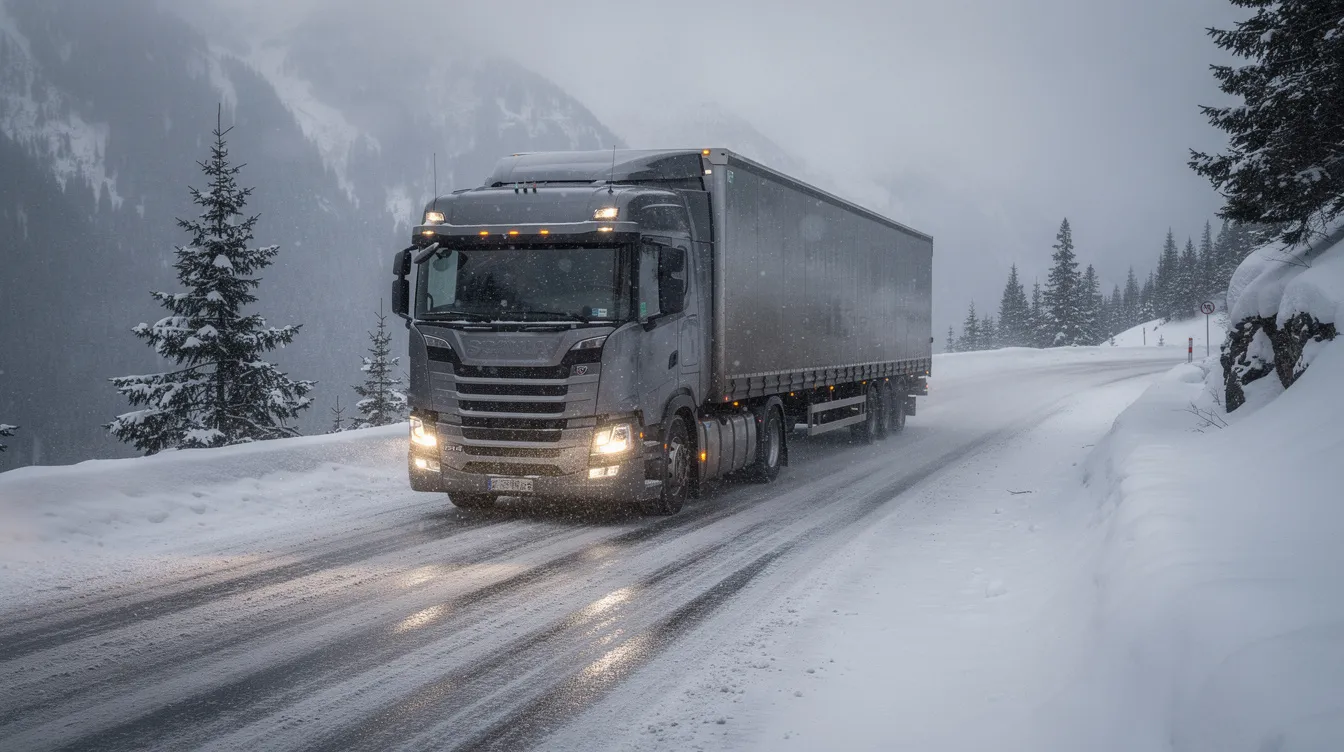
Jackknife crashes during winter storms near Santa Fe and Raton Pass
-
Rollovers on curved ramps and merge zones in metro areas
-
Multi-vehicle pileups triggered by dust storms near Socorro
-
Construction zone collisions near the Big I, where work zones saw 5 truck-involved fatal crashes in 2024
Shekter Rosete Law understands these corridor-specific risks and uses them when building a truck accident case for our clients.

How I‑25 Truck Accidents Differ From Ordinary Car Accidents
Key Differences from Car Accidents
A truck accident on I-25 is not just a bigger version of a car accident. The physics, the regulatory landscape, and the number of parties involved create a fundamentally different kind of case. Understanding these differences is crucial for anyone pursuing a truck accident claim.
-
A fully loaded commercial truck can weigh 20 to 30 times more than a passenger car. That weight disparity translates into vastly longer stopping distances—a tractor trailer traveling at 65 mph needs approximately 525 feet to stop, compared to about 300 feet for a passenger vehicle. When truck crashes happen, the energy transfer is catastrophic.
-
In 2020, 71% of fatalities in truck accidents involved other vehicle occupants—the people in passenger cars, not the truck driver. This statistic reflects the brutal size mismatch between commercial trucks and the cars around them.
-
Truck accident cases involve multiple liable parties unlike car accidents. Behind a single truck driver is typically a motor carrier, a freight broker, possibly a maintenance contractor, and a vehicle or parts manufacturer—each with separate insurance coverage.
-
Commercial trucking cases require specialized evidence that rarely exists in a standard auto accident: electronic logging devices recording hours of service, engine control module "black box data" capturing speed and braking patterns, dispatch communications, driver logs, and detailed maintenance records.
-
Federal regulations govern truck operations, complicating accident claims in ways that regular car crashes never do. A truck accident attorney must understand Federal Motor Carrier Safety Administration regulations, state adoption rules, and how service violations connect to negligence.
These differences are exactly why Shekter Rosete Law's broader practice—spanning car accidents, motorcycle accidents, truck accidents, catastrophic injuries, and wrongful death—gives our team the perspective to translate complex trucking evidence into clear, persuasive stories for New Mexico juries.
Seven Types of Defendants Who Might Owe You Money in an I‑25 Truck Accident Case
Types of Liable Parties
A serious I-25 truck accident can involve multiple parties, each carrying separate insurance policies. Identifying every responsible defendant is central to determining liability after a serious truck crash and increases the total available coverage and your ability to recover compensation for what you have lost.
Multiple parties can be liable in truck accidents, including:
-
The truck driver – for negligent driving, driver fatigue from exceeding hours of service limits, distracted driving, or impairment from alcohol or drugs
-
The motor carrier or trucking company – for unsafe dispatch policies, poor driver supervision, negligent hiring, failure to maintain vehicles, or pressuring drivers to violate safety rules. Civil liability may still attach depending on the company's control over the work, its safety requirements, and whether the driver was an employee or independent contractor.
-
A freight broker or shipper – for pressuring unrealistic delivery schedules, improperly loaded cargo, or failing to verify carrier safety records
-
A maintenance contractor or repair shop – for faulty brake repairs, missed inspections, or negligent repairs that lead to mechanical failure
-
A truck or component manufacturer – for defective brakes, tire blowouts caused by manufacturing defects, or steering system failures
-
A delivery truck or box truck operator – regional carriers and local businesses that operate commercial vehicles in interstate or intrastate commerce on I-25
-
A government entity – in rare cases, a municipality or state agency responsible for dangerously designed road segments, poor signage, or inadequate maintenance
Under New Mexico's pure comparative fault rule, fault can be divided among all responsible parties. Trucking companies must carry a minimum of $750,000 in liability insurance for trucks over 10,001 pounds—and many commercial trucks carry policies well above that minimum. Identifying negligent trucking companies and every other responsible party is how Shekter Rosete Law maximizes the available coverage in New Mexico truck accident cases.
The Critical 14‑Day Window to Preserve I‑25 Truck Crash Evidence
Some of the most powerful evidence in a truck accident case can be overwritten, deleted, or conveniently "lost" within days of the crash if a lawyer does not act immediately. Truck accident evidence preservation windows are shorter than car accidents, and trucking companies know it.
Key electronic sources at risk include:
-
Electronic logging devices that record driver duty status, driving time, and mandatory rest breaks
-
Engine control modules—the truck's electronic control module data provides critical information about driving before a crash, including speed, throttle position, braking, and engine diagnostics
-
Dashcam and forward-facing camera footage inside the cab or operated by third-party safety vendors
-
GPS and telematics data tracking the truck's route, stops, and speed
While federal rules require trucking companies to retain ELD records for at least six months, the reality is that dispatch records, text messages, internal safety notes, and some telematics data can disappear much sooner without a formal preservation demand. Trucking companies face penalties for violating safety regulations, but that does not stop evidence from being routinely purged in the normal course of business.
When retained after a serious I-25 crash, Shekter Rosete Law sends time-sensitive preservation (spoliation) letters to trucking companies, brokers, and other entities—often within days—to lock down this data before it disappears. This is especially critical near high-crash areas like the Big I interchange, Belen, and Santa Fe.
Do not wait. Call (505) 216-2510 or contact us online before speaking with any insurance adjuster so evidence can be preserved correctly.
Federal and State Trucking Regulations That Shape Your New Mexico Truck Accident Claim
Many commercial trucks on I-25 are subject to Federal Motor Carrier Safety Regulations enforced by the Federal Motor Carrier Safety Administration, in addition to New Mexico's own trucking rules under 18.3.4 NMAC. In winter, chain-related safety rules can also affect commercial vehicles traveling mountain corridors near the Colorado line, including the Raton Pass area when conditions deteriorate. Federal Motor Carrier Safety Administration regulations dictate requirements for commercial trucks, and trucking companies must comply with Federal Motor Carrier Safety Regulations. A truck accident lawyer in New Mexico navigates federal and state laws governing commercial trucking to build strong claims.
Several regulatory areas frequently matter in New Mexico truck accident cases:
-
Hours of Service (HOS) – Federal trucking regulations include limits on driver hours designed to prevent driver fatigue. Federal regulations govern truck driver hours of service to prevent fatigue. New Mexico carriers had over 6,405 hours-of-service violations recorded in recent inspection data, indicating that fatigue and log abuses remain a serious problem. HOS violations can support both negligence and punitive damages claims.
-
Driver qualification and training – CDL requirements, medical certifications, background checks, and driver qualifications are all governed by federal rules. Failures in this area can establish negligent hiring by the motor carrier.
-
Mandatory drug and alcohol testing – Pre-employment, random, and post-accident testing is required. Falsified results or failure to test can be compelling evidence of negligence.
-
Vehicle inspection, maintenance, and repair standards – Federal rules require pre-trip inspections, annual vehicle inspections, and detailed maintenance records. Faulty brakes are a leading cause of truck accidents, and poor vehicle maintenance can be traced through shop records and inspection reports. Colorado requires annual inspections for commercial vehicles as well, which matters for trucks crossing state lines on I-25.
-
Cargo securement and weight limits – Rules governing how loads must be secured and how much weight commercial motor vehicles can carry directly affect rollover and jackknife risks. Improperly loaded cargo can cause truck accidents and is frequently a contributing factor in I-25 wrecks.
Violations of these federal and state regulations are powerful evidence in a truck accident lawsuit. Shekter Rosete Law knows how to use service violations and safety shortcuts to build strong liability and punitive damages arguments for our clients.
Common Causes of I‑25 Trucking Accidents in New Mexico
The specific geography and traffic patterns of I-25 create a distinct set of hazards. Long straight stretches between Las Cruces and Socorro encourage speeding. Sudden congestion around Albuquerque forces abrupt braking. Steep grades approaching Santa Fe and the Colorado border test both vehicles and drivers.
Common Causes of Truck Crashes on I-25
-
Driver fatigue from pushing beyond Hours-of-Service rules or running overnight hauls across state lines. A truck accident attorney investigates this through ELD data, driver logs, and dispatch records that reveal whether the trucker was legally allowed to be on the road.
-
Distracted driving – cell phones, in-cab devices, GPS adjustments, and eating behind the wheel. Distracted driving contributes significantly to truck accidents. Phone records and cab camera footage can prove it.
-
Speeding and unsafe lane changes in construction zones, merge areas, and interchanges. Many commercial trucks travel at the same posted 75 mph speed limit as passenger cars on New Mexico interstates, leaving almost no margin for error.
-
Poor vehicle maintenance leading to brake failures, tire blowouts, and steering problems. Maintenance records and pre-trip inspection reports can reveal patterns of neglect.
-
Overloaded or improperly secured cargo increasing rollover and jackknife risks, especially on curves and during high-wind events. Improperly loaded cargo can cause truck accidents when loads shift mid-transit.
-
Impaired driving involving alcohol, drugs, or prescription medications. Post-accident drug and alcohol testing results are critical evidence.
-
Weather-related factors – ice and snow near Santa Fe and Raton Pass, summer thunderstorms, and dust storms near Socorro. Weather conditions like high winds can lead to truck accidents, particularly when a commercial driver fails to adjust speed or pull over.
Understanding what really caused the truck accident is crucial for New Mexico juries and for settlement negotiations with trucking insurers.
Catastrophic Injuries and Wrongful Death After an I‑25 Truck Crash
When an 80,000-pound truck collides with a passenger vehicle, the injuries are often life-altering or fatal. Truck accident injuries tend to be far more severe than those in regular car crashes because of the sheer size and kinetic energy involved. Truck accidents often result in catastrophic injuries due to size disparity between commercial trucks and passenger cars.
Types of Catastrophic Injuries in Truck Accidents
-
Traumatic brain injuries, including mild TBIs that may initially be missed in the chaos of the emergency room. Truck accidents often result in traumatic brain injuries.
-
Spinal injuries causing partial or complete paralysis. Spinal injuries are common in truck accidents.
-
Multiple fractures and crush injuries requiring surgeries, hardware implantation, and long hospital stays
-
Severe burns from fuel-fed fires or explosions. Burns may result from fires in truck accidents.
-
Internal bleeding from blunt-force impact. Internal bleeding can occur from truck accident impacts.
-
Amputation of limbs in the most devastating collisions. Amputation of limbs can occur in severe truck accidents.
In 2020, 71% of fatalities in truck accidents were occupants of other vehicles—not the truck driver. Families who lose a loved one in a fatal I-25 truck accident can pursue wrongful death claims seeking compensation for funeral expenses, medical bills from final treatment, loss of financial support, and loss of companionship under New Mexico law.
Shekter Rosete Law also handles related practice areas like medical malpractice, nursing home injury and abuse, and insurance bad faith, which can intersect with long-term care needs and insurance disputes following catastrophic injuries.
If you have lost a loved one or suffered severe injuries in an I-25 truck accident, please call (505) 216-2510 for a confidential, no-cost review of your case.
What Damages Are Available in New Mexico I‑25 Truck Accident Cases?
Damages in a New Mexico truck accident case are designed to make the injured person as whole as money can. Because trucks over 10,001 pounds must carry at least $750,000 in liability insurance—and many commercial policies are significantly higher—there is often more insurance coverage available than in a typical car accident or auto accident claim.
Types of Compensation in Truck Accident Cases
-
Economic damages – medical bills already incurred, future medical care and rehabilitation, medical expenses for ongoing treatment, lost wages and lost income, reduced earning capacity, out-of-pocket costs for home modifications, prosthetics, and in-home care. Economic damages cover medical expenses and lost wages.
-
Non-economic damages – pain and suffering, emotional distress, loss of enjoyment of life, disfigurement, and loss of consortium for spouses and family members. Non-economic damages include pain and suffering and emotional distress.
-
Property damage – vehicle repair or replacement and personal property destroyed in the crash
-
Punitive damages – available when the trucking company's conduct or the truck driver's behavior rises to the level of willful, wanton, or reckless disregard for safety. Punitive damages may be awarded for egregious conduct such as systematic HOS violations, falsified driver logs, or knowingly putting unsafe trucks on the road.
In most private New Mexico truck accident cases, there are no statutory caps on economic or non-economic damages. Governmental entities may have special limitations and notice requirements under the NM Tort Claims Act.
Shekter Rosete Law works with medical experts, life-care planners, and economic experts when needed to fully document the long-term impact of catastrophic injuries and maximize the value of your truck accident claim.
New Mexico's Pure Comparative Fault Rule and How It Affects Your Truck Accident Claim
New Mexico follows a pure comparative negligence rule under NMSA § 41-3A-1, and understanding it is critical in truck accident litigation. In New Mexico, if a party is partially at fault for an accident, their damages can be reduced accordingly—but they are never completely barred from recovery.
How Comparative Fault Works in New Mexico
-
An injured person's compensation is reduced by their percentage of fault but is not eliminated even if they are more at fault than the truck driver. This differs from Colorado law, where Colorado follows modified comparative negligence and being over 50% at fault bars recovery entirely.
-
Trucking companies and their insurance adjusters routinely try to exaggerate the victim's share of blame—alleging sudden stops, speeding, distraction, or failure to signal—to reduce what they owe.
-
A strong truck accident attorney rebuts these claims using crash reconstruction, ELD data, black box data, and physical evidence from the accident scene.
Simple example: If a jury determines your total damages are $1,000,000 but assigns you 30% fault, your recovery is $700,000. Under New Mexico's pure comparative fault system, even at 70% fault, you would still recover $300,000. Compensation can be reduced by the claimant's percentage of fault, but it is never wiped out.
Shekter Rosete Law's role is to push back against unfair blame-shifting and hold all negligent trucking defendants fully accountable under New Mexico law.
Deadlines That Can Destroy an I‑25 Truck Accident Case If You Wait
Strict legal deadlines apply to every truck accident case in New Mexico. Miss them, and your right to recover compensation disappears permanently—no matter how strong your case is.
Statute of Limitations and Notice Requirements
-
New Mexico's statute of limitations for personal injury claims is three years from the date of injury. This applies to motor vehicle accidents including truck wrecks.
-
Wrongful death claims also generally must be filed within three years, calculated from the date of death.
-
If a government entity or public employee is involved—for example, a state highway defect contributed to the crash—much shorter deadlines and special written notice requirements apply, sometimes as short as 90 days.
-
None of these deadlines pause because you are still in medical treatment, negotiating with insurers, or grieving.
Trucking insurers know these deadlines. They may deliberately delay or string out settlement discussions, hoping the clock runs out on an unrepresented injury victim. An experienced personal injury lawyer ensures that never happens.
Do not wait. Contact Shekter Rosete Law at (505) 216-2510 or through our online contact form so we can track and protect every applicable deadline in your case.
What Evidence Matters Most in an I‑25 Truck Accident Case?
Winning a New Mexico truck accident case often comes down to evidence collected in the first days and weeks after the crash. Preserve evidence like electronic data from the truck early, or risk losing the foundation of your case.
Key Evidence in Truck Accident Claims
-
ELD and ECM data showing speed, braking patterns, hours of service compliance, and driver behavior before the crash
-
Dashcam and third-party video from nearby businesses, traffic cameras, or NMDOT highway cameras where available
-
Driver qualification and personnel files, including prior crashes, safety violations, drug and alcohol test results, and driver qualifications documentation
-
Maintenance records, inspection reports, and repair logs demonstrating patterns of neglect or service violations
-
Cargo and load documentation, including bills of lading, weight tickets, and gross vehicle weight rating records
-
Physical evidence from the accident scene: skid marks, debris fields, vehicle crush patterns, and barrier damage
-
A police report documenting the initial findings, witness statements, and officer observations
-
Medical records and expert opinions linking truck accident injuries to the crash and explaining long-term consequences
Shekter Rosete Law coordinates with accident reconstructionists and other experts to analyze this data and distinguish a complex commercial truck accident claim from an ordinary car accident case. An unrepresented person rarely has access to this level of evidence without an experienced truck accident attorney sending subpoenas and preservation letters on their behalf.
How Shekter Rosete Law, PC Handles I‑25 Truck Accident Cases in New Mexico
Shekter Rosete Law treats every I-25 truck accident case as a complex corporate-defendant claim from day one—not as a routine insurance matter.
Our Process for Handling Truck Accident Cases
-
Immediate client-focused steps – listening to your account, helping coordinate medical care, and advising you on communications with insurance adjusters so nothing you say is used against you
-
Rapid evidence preservation – sending spoliation letters to trucking companies, freight brokers, and insurers within days of being retained to lock down ELD data, dispatch records, and maintenance logs
-
In-depth investigation – working with experts in trucking safety, accident reconstruction, and medicine to identify every cause and every responsible party
-
Aggressive negotiation – pursuing the full value of your truck accident case against multiple insurers, not accepting the first lowball offer
-
Trial preparation – building every case as if it will go before a New Mexico jury, because insurers settle serious claims for more when they know the lawyer across the table actually tries cases
Our broader practice groups—car accidents, motorcycle accidents, catastrophic injuries, wrongful death, insurance bad faith, medical malpractice, civil rights, and nursing home abuse—equip our team to handle the overlapping issues that frequently arise in serious New Mexico truck accident cases.
We represent clients across New Mexico, including Albuquerque, Las Cruces, Rio Rancho, Santa Fe, Roswell, Farmington, Hobbs, and Taos.
Schedule a free consultation by calling (505) 216-2510 or sending a confidential message through our online contact form.
About Founding Attorneys Jamison Shekter and Mixcoatl "Mish" Miera‑Rosete
Shekter Rosete Law, PC is a New Mexico trial firm led by Jamison Shekter and Mixcoatl "Mish" Miera-Rosete, both admitted to practice in New Mexico and the U.S. District Court for the District of New Mexico.
-
They focus on representing injured people and families in truck accidents, car accidents, motorcycle accidents, medical malpractice, personal injury, wrongful death, insurance bad faith, civil rights violations, and nursing home injury and abuse.
-
Both are trial-oriented personal injury attorneys who build each truck accident case as if it will be decided by a New Mexico jury—because that preparation is what drives fair settlements.
-
They are deeply connected to the Albuquerque community and committed to serving clients across the entire state, not just in the metro area.
-
Their experience litigating against large insurers and corporate defendants directly informs the strategic approach they take in commercial trucking cases, including along I-25.
At Shekter Rosete Law, clients communicate directly with their attorneys throughout the case—not just with support staff. That direct relationship matters when your future depends on getting the details right.
What to Do Right After an I‑25 Truck Accident in New Mexico
Safety and medical care come first. But if you are physically able, certain steps can significantly strengthen a future truck accident claim.
Steps to Take After an I-25 Truck Accident
-
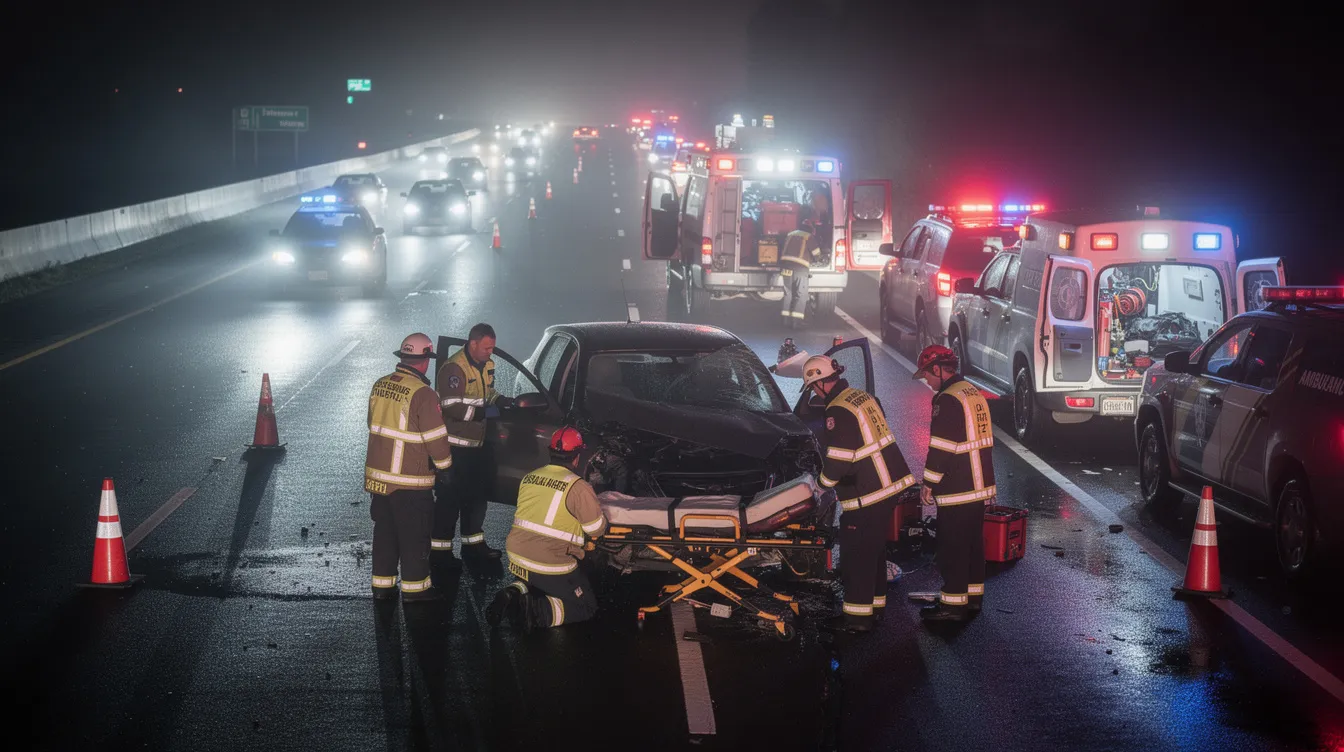
Call 911 immediately and request police and medical response. File a police report if there are injuries or damages.
-
Seek medical attention immediately after a truck accident, even if injuries seem minor. Accept evaluation at the scene and follow up at an emergency department or urgent care. Delayed symptoms after a car accident or truck wreck are common and documented.
-
Document the accident scene and gather evidence promptly – take photos and videos of vehicle positions, damage, skid marks, road conditions, weather, and visible injuries if you are able.
-
Collect information – get contact and insurance details for the truck driver, trucking company name, USDOT number, and any witnesses at the scene.
-
Avoid discussing fault at the accident scene or apologizing. Limit your statements to basic facts for officers.
-
Contact a truck accident lawyer before speaking to insurers – do not give any recorded statement to an insurance adjuster without legal representation.
Contact Shekter Rosete Law at (505) 216-2510 or online as soon as you are stable so we can start protecting your truck accident case immediately.
Why You Should Never Sign Anything From the Trucking Company Before Talking to a Lawyer
It is common for trucking company insurers and adjusters to contact injured people within days—or even hours—of an I-25 crash. Trucking companies often send rapid-response teams to accident scenes to minimize liability, and those teams are not there to help you.
What to Watch Out For
-
Early settlement offers that seem helpful but drastically undervalue future medical care, lost wages, and pain and suffering
-
Broad release forms that permanently waive all current and future personal injury claims, including for injuries not yet diagnosed
-
Requests for recorded statements designed to shift blame or create inconsistencies that the insurance company can use against you later
-
Medical record authorizations giving insurers sweeping access to your entire medical history, including unrelated conditions they can use to dispute your truck accident injuries
Politely decline to sign or record anything until you have consulted an experienced truck accident lawyer who represents your interests—not the trucking company's.
Contact Shekter Rosete Law at (505) 216-2510 or via secure online message for a free truck accident case review before responding to anyone from the trucking company or their insurer.
Serving I‑25 Truck Accident Victims Across New Mexico
Although Shekter Rosete Law is based in Albuquerque, we represent truck accident victims statewide—wherever on I-25 or connecting routes the accident occurred.
Communities and Corridors We Serve
-
Las Cruces and nearby southern I-25 segments approaching the Texas border
-
Belen, Los Lunas, and the greater Albuquerque metro area, including Rio Rancho
-
Santa Fe and northern I-25 stretches toward Las Vegas, NM, and the Colorado border
-
Socorro, Truth or Consequences, and other communities along the I-25 corridor
-
Roswell, Farmington, Hobbs, Taos, and other New Mexico cities connected to I-25 by state highways
We handle interstate commerce issues when motor carriers operating under federal authority travel to and from Texas, Colorado, Arizona, and other states through New Mexico. Whether the crash involves a semi truck, a regional delivery truck, or an oilfield service vehicle accessing I-25, Shekter Rosete Law has the truck accident resources, experience, and commitment to pursue the claim.
Call (505) 216-2510 or reach out through our contact form to arrange a free consultation from anywhere in New Mexico.

Frequently Asked Questions About I‑25 Truck Accident Cases in New Mexico
Do I have a case if the truck driver was from another state but the crash happened on I‑25 in New Mexico?
Yes. If the truck accident occurred in New Mexico, New Mexico substantive law generally governs the claim, regardless of where the truck driver or trucking company is based. New Mexico courts regularly handle cases involving out-of-state motor carriers engaged in interstate commerce on I-25. Shekter Rosete Law can file suit in New Mexico courts and handle service of process and jurisdiction issues against out-of-state defendants. A Denver truck accident attorney might handle the Colorado side, but for crashes in New Mexico, you need a New Mexico firm that knows the state's pure comparative fault rules and local court procedures.
What if I was hit by a delivery truck or box truck instead of a semi?
Many delivery trucks and box trucks qualify as commercial motor vehicles if they meet certain weight thresholds or engage in interstate commerce. A New Mexico truck accident case does not require an 18-wheeler—semi truck collisions get the most attention, but collisions with smaller commercial vehicles on I-25 can still cause serious injuries and involve corporate defendants, federal regulations, and complex insurance issues. Shekter Rosete Law handles delivery truck and regional carrier crashes alongside traditional semi truck accidents.
How do I afford a truck accident attorney if I'm already struggling with medical bills?
Shekter Rosete Law handles truck accident cases on a contingency fee basis. You pay no attorney's fees up front, and the firm only receives a fee if it recovers money for you through settlement or verdict. Initial consultations are free. This structure allows injury victims and families to pursue a personal injury lawsuit even when facing significant financial stress after a serious truck accident.
How long will my I‑25 truck accident case take to resolve?
Timelines vary based on injury severity, liability disputes, the number of defendants, and whether the case settles or requires a personal injury lawsuit and trial. Catastrophic injury cases and disputed liability scenarios generally take longer because they require more extensive medical documentation, expert analysis, and sometimes litigation against multiple parties. An attorney can provide a more tailored expectation after reviewing the facts during a free consultation.
Can a truck accident case involve both personal injury and insurance bad faith claims?
Yes. The main truck accident case focuses on holding negligent parties—the truck driver, the trucking company, and others—liable for personal injury or wrongful death damages. If an insurance company unreasonably delays payment, denies a valid claim, or otherwise acts in bad faith under New Mexico law, a separate insurance bad faith claim may be appropriate. Shekter Rosete Law has a dedicated insurance bad faith practice and can evaluate whether the insurer's conduct justifies an additional claim beyond the underlying truck accident case. This dual approach can significantly increase the total recovery available to injury victims.