Understanding Emergency Room Misdiagnosis in New Mexico: Key Insights
Key Takeaways
-
Many serious injuries and deaths in New Mexico trace back to emergency room misdiagnosis, delayed diagnosis, and premature discharge that could have been prevented with proper care.
-
Emergency room errors can be considered medical malpractice when care falls below the accepted standard and causes additional harm to the patient.
-
You can sue an emergency room for negligence in New Mexico, but you must prove duty, breach, causation, and damages-typically with expert medical testimony.
-
Shekter Rosete Law, PC handles emergency room malpractice and misdiagnosis cases statewide, from Albuquerque to Las Cruces, Santa Fe, Roswell, Farmington, Hobbs, Taos, and everywhere in between.
-
If you suspect an ER error harmed you or a loved one, call us at (505) 216-2510 or message us online for a free case review.
Emergency Room Misdiagnosis in New Mexico: Why These Cases Matter
About 40% of Americans visit the emergency room each year, and in New Mexico's busiest hospitals-Albuquerque, Las Cruces, Santa Fe, Rio Rancho-overcrowding and pressure to process patients quickly contribute to diagnostic errors that can change a patient's life forever. Each year, an estimated 250,000 people die due to medical errors in the United States, with a staggering number of those deaths originating in emergency departments. Staffing shortages can increase the risk of misdiagnosis in emergency departments, and New Mexico faces this problem head-on: 32 of 33 counties have critical healthcare provider shortages.
An emergency room misdiagnosis happens when an er doctor identifies the wrong condition-or fails to identify a dangerous one at all. A delayed diagnosis occurs when the correct condition is eventually recognized, but only after critical treatment windows have closed. These errors are most dangerous with time-sensitive conditions like stroke, heart attack, sepsis, and internal bleeding. Not every bad outcome in the emergency room is emergency room malpractice, but when a medical professional ignores clear symptoms, skips necessary tests, or misreads imaging results, the result may be considered medical malpractice under New Mexico law.
Founding partners Jamison Shekter and Mixcoatl "Mish" Miera-Rosete are Albuquerque-based trial lawyers who regularly handle emergency room cases across New Mexico. Their legal team at Shekter Rosete Law, PC understands how these cases unfold in local hospitals-and what it takes to hold health care providers accountable.
If your ER visit made things worse, call Shekter Rosete Law, PC at (505) 216-2510 or reach out through our secure contact form for a free case review.
What Is Emergency Room Negligence and Misdiagnosis?
Emergency room negligence occurs when ER care falls below what a reasonably careful er doctor or nurse in New Mexico would provide under similar circumstances. Emergency room staff must meet the accepted standard of care, meaning that chaotic conditions, overcrowding, or understaffing do not excuse substandard medical treatment.
Misdiagnosis, delayed diagnosis, or failure to diagnose in the emergency room can constitute emergency room medical malpractice when it leads to preventable harm. Research shows that 90% of serious misdiagnosis-related harms are due to failures in clinical reasoning and assessment-not equipment failures or bad luck. Misdiagnosis can lead to severe harm and confusion in emergency departments, leaving patients and families unsure of what went wrong. Emergency room negligence can lead to preventable harm or death.
The accepted standard of care means different things depending on the situation. For example, a patient presenting with classic chest pain and shortness of breath should receive an EKG and cardiac workup promptly. A patient with sudden-onset neurological symptoms should be evaluated for stroke using established "last known well" timelines and CT imaging. A head trauma patient should receive appropriate imaging before discharge. These are not optional extras-they are baseline expectations.
It is important to distinguish between an unavoidable complication-where care was reasonable but the outcome was poor-and an emergency room error that a competent medical provider could have prevented. When a doctor fails to follow standard protocols and a patient suffers as a result, that is where legal claims arise.
Common Emergency Room Errors in New Mexico
Emergency room errors can lead to serious injuries or death. Across New Mexico hospitals and freestanding emergency rooms-in Albuquerque, Las Cruces, Rio Rancho, Santa Fe, Roswell, Farmington, Hobbs, Taos, and rural facilities-certain patterns of common emergency room errors appear repeatedly in medical malpractice cases. High patient volume in emergency rooms contributes to misdiagnosis, and communication breakdowns between staff can compound the problem.
The most frequently seen emergency room errors include:
-
Misdiagnosis or incorrect diagnosis of a dangerous condition
-
Delayed diagnosis that narrows or eliminates treatment options
-
Failure to order appropriate tests (CT scans, bloodwork, EKGs)
-
Improper triage that assigns low priority to patients with red-flag symptoms
-
Medication errors , including wrong medication, wrong dosage, or failure to check allergies
-
Inadequate monitoring of patients awaiting results or showing changes
-
Premature discharge before ruling out life-threatening conditions
-
Communication breakdowns during shift changes, between departments, or with patients and families
Many emergency room malpractice cases begin as visits where "everything seemed fine." The patient is sent home, only to deteriorate hours or days later. By the time a second hospital catches the problem, the damage-brain injury, organ failure, or death-is already done. Emergency room errors can result from poor communication and triage failures that, in many situations, are entirely preventable.

Misdiagnosis and Delayed Diagnosis in the ER
Diagnostic errors account for nearly half of ER malpractice claims nationally, and the reasons are straightforward: rushed exams, incomplete information, and snap decisions under pressure. Almost half of ER malpractice claims are due to diagnostic errors. Diagnostic errors account for 126,000 deaths annually in the U.S.-a number that reflects how often these mistakes prove fatal.
Here are concrete examples relevant to New Mexico patients:
-
A heart attack labeled as "indigestion" or acid reflux. Heart attacks are frequently misdiagnosed as indigestion in younger patients, especially women, who may present with atypical symptoms.
-
A stroke treated as a "migraine" or "vertigo." Commonly misdiagnosed conditions include strokes and myocardial infarctions, and delays of even 30 minutes can mean the difference between recovery and permanent disability.
-
Sepsis mistaken for "the flu." Sepsis can be overlooked due to symptoms resembling less severe infections, particularly in elderly patients or those with weakened immune systems.
-
Internal bleeding missed after a car crash. Abdominal tenderness after trauma demands imaging, yet diagnostic errors often occur with abdominal complaints and heart issues.
Delayed diagnosis can lead to missing critical treatment windows. Consider a patient who arrives at an Albuquerque ER with sudden weakness on one side of the body. If the emergency room physicians fail to order a CT scan for hours, the window for clot-dissolving medication closes. The patient is left with permanent brain injury-a result that proper, timely care could have prevented.
Non-typical symptoms can lead to misinterpretation in emergency room diagnoses. Atypical symptoms are often the most commonly misdiagnosed in emergency rooms, and cognitive bias can cause doctors to overlook life-threatening conditions by "anchoring" on the first diagnosis they consider. Incomplete patient history contributes to misdiagnosis in emergency settings, particularly when patients cannot communicate clearly or arrive alone. These factors, combined with the chaotic pace of emergency departments, explain why diagnostic errors in U.S. emergency departments occur at an estimated rate of 5.7% of all ED visits.
When a reasonably careful ER provider would have recognized the condition and treated sooner, that failure may be considered medical malpractice-and 68% of misdiagnosis cases involve critical conditions like strokes and heart attacks.
Testing, Triage, and Monitoring Errors
Errors in ordering or interpreting diagnostic tests can result in significant misdiagnoses. When emergency room doctors fail to order a CT scan for a patient presenting with "the worst headache of their life," or when lab results showing elevated white blood cell counts are ignored, conditions like subarachnoid hemorrhage or sepsis go undetected. Misdiagnosis can occur if necessary diagnostic tests are not ordered or interpreted properly.
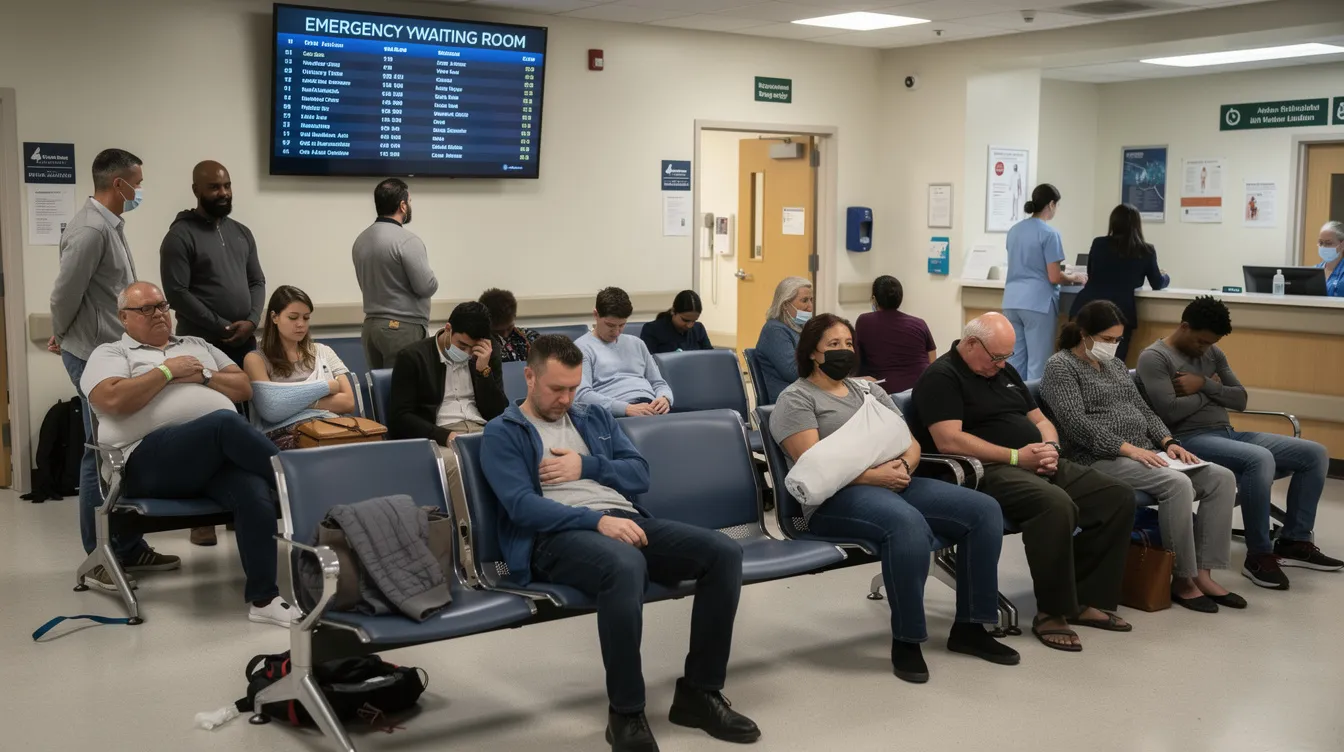
Improper triage is another common emergency room error. A patient with chest pain, confusion, or neurological symptoms should be flagged as high priority-but in overcrowded emergency rooms, these patients sometimes wait hours before being seen. Consider a stroke patient left in the waiting room for over an hour, or a child with a rising fever and altered mental status whose vital signs are not re-checked for several hours. These delays can be catastrophic.
Inadequate monitoring-placing patients in hallways, failing to reassess vital signs, or losing track of patients during shift changes-allows conditions to deteriorate without timely intervention. These failures may support an emergency room malpractice lawsuit when they result in significant further injury or death.
Medication and Discharge Errors
Emergency room medication errors involve administering treatment with the wrong drug, wrong dosage, dangerous drug-drug interactions, or failure to check a patient's allergy history. Medication errors harm 1.5 million people annually in the U.S. High-risk medications commonly misused in emergency rooms include anticoagulants, opioids, insulin, and antibiotics. When the wrong medication is given-or a wrong drug interaction is missed-the consequences can include severe pain, organ damage, or death.
Premature discharge is one of the most devastating emergency room errors. Premature discharge can lead to serious complications or death, particularly when patients are sent home without ruling out conditions like appendicitis, ectopic pregnancy, pulmonary embolism, or traumatic brain injury. Rushed discharge in crowded emergency rooms means patients may be told "it's just a virus" when they actually have a condition requiring immediate medical attention.
The Trujillo v. Presbyterian Healthcare Services case illustrates this pattern: a patient visited an ER with chest pain, was misdiagnosed with joint pain instead of pneumonia, was discharged, and died two days later. These errors connect directly to serious damages-ICU stays, emergency surgery, long-term disability, additional medical expenses, lost income, and wrongful death claims under New Mexico law.
When an ER Error Becomes Medical Malpractice Under New Mexico Law
Not every poor outcome in the emergency room rises to the level of a medical malpractice claim. New Mexico emergency room malpractice cases hinge on whether the medical care fell below accepted standards and whether that failure caused harm. The question is always: did the ER provider do what a reasonably competent emergency room physician would have done, given the same symptoms and information?
Emergency room cases are fact-specific. The same mistake might be malpractice in one situation-where clear symptoms were ignored-and not in another, where the presentation was genuinely ambiguous. Shekter Rosete Law, PC investigates whether a careful ER provider in New Mexico would have acted differently under the same circumstances. If you are unsure whether your situation qualifies, do not assume you "don't have a case" without speaking to an experienced attorney who understands medical malpractice law in New Mexico .
Duty of Care and Breach in the Emergency Room
A duty of care in emergency rooms begins once the hospital initiates medical evaluation-after triage, registration, or the start of a doctor patient relationship. From that point, the ER team owes the patient competent, attentive care.
A breach of duty occurs when the emergency room doctors or nurses fail to act as reasonably careful providers would under similar conditions. Proving negligence requires demonstrating a breach of duty. Examples of breaches include:
-
Ignoring abnormal vital signs
-
Not ordering an EKG when a patient presents with classic cardiac symptoms
-
Misreading imaging or lab results
-
Failing to call a specialist when the situation demands it
-
Discharging a patient with obvious red-flag symptoms
Proving breach in emergency room cases usually requires expert testimony from qualified emergency medicine specialists or other relevant medical professionals. At Shekter Rosete Law, PC, we work with medical experts who review emergency room medical records and identify exactly where care deviated from standard practice.
Causation and Damages: Linking the Error to the Harm
Causation means showing that the emergency room error actually changed the outcome. For example, if earlier diagnosis of a stroke would likely have prevented permanent brain damage, the delay is the cause of the additional harm. Delays in treatment can worsen patient outcomes significantly.
Some injuries may have occurred even with perfect care. New Mexico medical malpractice law requires proof that the breach more likely than not caused additional harm beyond what would have happened anyway.
Damages in emergency room malpractice lawsuits typically include:
-
Additional hospitalizations and surgeries
-
Rehabilitation and ongoing medical care
-
Lost wages and loss of earning capacity
-
Pain and suffering
-
Wrongful death damages for surviving family members
-
Medical expenses already incurred and future financial support needs
In misdiagnosis cases, damages may include progression of disease, permanent disability, cognitive impairment, or the need for lifelong care. Shekter Rosete Law, PC evaluates both immediate and future damages, often working with economists and medical experts to present a complete picture when seeking financial compensation for malpractice victims.
Evidence That Can Make or Break an Emergency Room Misdiagnosis Case
Documentation and early investigation are the backbone of any emergency room malpractice case. Without the right evidence, even a clear-cut case of emergency room negligence can fall apart.
Key evidence sources include:
-
ER medical records : triage notes, nursing charts, physician notes, and vital sign logs
-
Test orders and results : lab work, imaging reports, EKG readings
-
Medication administration records : what was given, when, and by whom
-
Discharge paperwork : instructions, diagnoses listed, and follow-up orders
-
Witness statements : family members who observed symptoms, delays, or conversations with staff
-
Timestamps : when the patient arrived, when tests were ordered versus completed, when imaging was read, and when treatment was administered
In delayed diagnosis claims, the gap between when a test was ordered and when it was read-or between when symptoms appeared and when administering treatment began-often determines whether the case succeeds. Gathering medical records is crucial for patients experiencing misdiagnosis.
What You Can Do Right Now to Protect Your Case
If you suspect emergency room negligence harmed you or a family member, take these steps immediately:
-
Keep all paperwork : discharge instructions, bills, prescriptions, and any written communications from the hospital.
-
Write down a timeline : when symptoms started, when you arrived at the ER, what you were told, and what happened after discharge.
-
List witnesses : names and contact information for anyone who was with you or observed your care.
-
Save photos and messages : document visible symptoms, text messages about how you were feeling, and any communications about the visit.
-
Request your medical records : patients have a legal right to request copies of their medical records in New Mexico. Do this as soon as possible after the ER visit.
-
Do not sign broad releases or give detailed recorded statements to insurance companies before speaking with a malpractice lawyer.
Emergency room patients should document all symptoms and communications with medical staff. Acting within days or weeks of the incident greatly strengthens the ability to investigate and build a medical malpractice claim.
Call Shekter Rosete Law, PC at (505) 216-2510 or contact us online for guidance on your next steps.
Deadlines and Special Rules for Emergency Room Malpractice in New Mexico
Under New Mexico's Medical Malpractice Act, a medical malpractice lawsuit must generally be filed within three years from the date the malpractice occurred . Statutes of limitations for malpractice claims range from one to three years depending on the type of claim and jurisdiction, but in New Mexico, the three-year window is an occurrence-based deadline-meaning it runs from the date of the error, not from the date you discovered it.
Special rules exist for children and incapacitated persons. Under amendments effective January 1, 2022, minors and legally incapacitated individuals have extended deadlines-generally one year after reaching age 18 or the end of incapacity. A prior rule allowed children under six to file until their ninth birthday; this has been replaced by the broader tolling provision.
Different rules may also apply when the negligent provider is a qualified health care provider under the New Mexico Medical Malpractice Act , or when the healthcare facility is a government entity. Statutes of limitations for ER negligence claims range from one to three years depending on these factors.
Waiting too long can permanently bar an emergency room malpractice lawsuit, even when the negligence is clear and the injuries are severe. Do not assume you have plenty of time. Shekter Rosete Law, PC offers free consultations to review ER misdiagnosis timelines and preserve claims before deadlines expire.
How a New Mexico Emergency Room Malpractice Lawyer Can Help
Emergency room malpractice and misdiagnosis cases are among the most complex in medical malpractice law. They require deep knowledge of emergency medicine standards, access to qualified experts, and the litigation skill to present a compelling case. An emergency room malpractice lawyer at Shekter Rosete Law, PC provides:
-
Obtaining and analyzing all relevant medical records from the ER and subsequent treatment
-
Consulting with board-certified emergency medicine and specialty medical experts
-
Evaluating immediate and long-term damages, including lost wages, medical expenses, and pain and suffering
-
Filing the legal claim within applicable deadlines
-
Litigating aggressively through negotiation or, if necessary, jury trial
Jamison Shekter and Mish Miera-Rosete are trial-ready medical malpractice attorneys who prepare every emergency room case as though it will go before a New Mexico jury. Their experience extends to related practice areas that often intersect with ER claims, including wrongful death , car accidents, truck and motorcycle crashes, nursing home injury, and insurance bad faith.
The firm represents clients throughout New Mexico-Albuquerque, Santa Fe , Las Cruces, Rio Rancho, Roswell, Farmington, Hobbs, Taos, and smaller communities.

Our Approach at Shekter Rosete Law, PC
At Shekter Rosete Law, PC, clients work directly with their attorneys-not assistants or call centers. Every emergency room malpractice case receives a tailored litigation strategy built around the specific facts, the providers involved, and the harm suffered.
We work on a contingency fee basis in medical malpractice and personal injury matters. That means no upfront attorney fees-clients pay nothing unless we recover compensation on their behalf. Our goal is straightforward: hold hospitals and providers accountable when emergency room negligence causes preventable harm, and secure the financial support our clients need to move forward.
We have experience with serious injury and wrongful death claims throughout New Mexico, and our commitment to each case reflects a broader mission-improving safety in New Mexico emergency rooms by ensuring negligent care has real consequences.
Schedule a free consultation by calling (505) 216-2510 or send us a confidential message through our online contact form .
What to Do if You Suspect an Emergency Room Misdiagnosis in New Mexico
Discovering that an ER visit may have made things worse instead of better is overwhelming. You may be dealing with a worsening condition, mounting bills, and the fear that something was missed. Here is what you should do:
-
Get follow-up medical care immediately. Your health comes first. See your primary care doctor or visit a different healthcare facility.
-
Ask your new providers questions. Explain your ER visit, share your symptoms, and ask whether the original diagnosis was appropriate. Patients should seek a second opinion if they feel their condition was missed. A second opinion can protect your health and help document the earlier emergency room error.
-
Gather your records. Request complete medical records from both the original emergency room and any subsequent treatment.
-
Document your symptoms. Keep a written log of pain, limitations, new symptoms, and how the injury has affected your daily life and ability to work.
-
Avoid discussing the case on social media. Anything you post can be used against you.
-
In wrongful death situations , obtain the death certificate, any autopsy reports, and document all medical bills and funeral expenses. If a patient died after a missed diagnosis, surviving family members may have a wrongful death claim.
Do not delay contacting an emergency room malpractice lawyer who understands New Mexico law. The sooner an investigation begins, the stronger your legal claim will be.
Call Shekter Rosete Law, PC at (505) 216-2510 or message us online to discuss your situation today.
Frequently Asked Questions About Emergency Room Misdiagnosis in New Mexico
Is every emergency room mistake considered medical malpractice in New Mexico?
No. Not every emergency room error is legally considered medical malpractice. The care must fall below the accepted standard of care, and the failure must cause additional harm to the patient. Some bad outcomes happen even when emergency room doctors follow proper protocols. If you are unsure, have an emergency room error attorneys team review your records before assuming your case is too small or too complex.
Can I sue the emergency room or hospital directly, or only the doctor?
An emergency room malpractice lawsuit in New Mexico can involve multiple defendants, including ER doctors, nurses, the hospital itself, and sometimes outside staffing companies. Whether the hospital can be held accountable depends on contracts, employment relationships, and whether emergency room physicians are employees or independent contractors. Shekter Rosete Law, PC investigates all potentially responsible parties to maximize recovery for malpractice victims.
What if the emergency room sent me home and another hospital later found a serious problem?
This is one of the most common patterns in ER malpractice cases. Premature discharge at the first emergency room, followed by a correct diagnosis at a second facility, raises the question of whether a reasonable ER provider should have recognized the condition and kept the patient for further testing or medical treatment. Keep all records from both facilities so a malpractice attorney and medical experts can compare care and timelines.
How long do emergency room malpractice cases take in New Mexico?
These cases often take many months to several years, depending on complexity, the severity of the severe injury, and whether the case settles or goes to trial. Careful review by medical experts and detailed discovery are necessary in medical malpractice cases, which can lengthen the process but ultimately strengthen the claim. Shekter Rosete Law, PC keeps clients informed about progress and milestones throughout.
How much does it cost to hire an emergency room malpractice lawyer at Shekter Rosete Law, PC?
Initial consultations are completely free, and there are no upfront attorney fees. The firm works on a contingency fee basis-we only get paid if we recover compensation for you through settlement or verdict. Call (505) 216-2510 or contact us through our online form to discuss your potential emergency room error or misdiagnosis claim at no cost and with no obligation.