Can I Get Traffic Camera Footage of My Car Accident? Here’s How.
If you have been in a car accident in New Mexico, you may be wondering whether you can get traffic camera footage that captured the collision. The short answer is: sometimes yes, but only if you move fast. In many cases, footage is erased within hours. This guide from Shekter Rosete Law, PC explains exactly how traffic cameras work in New Mexico, how to request footage, and why timing is everything.
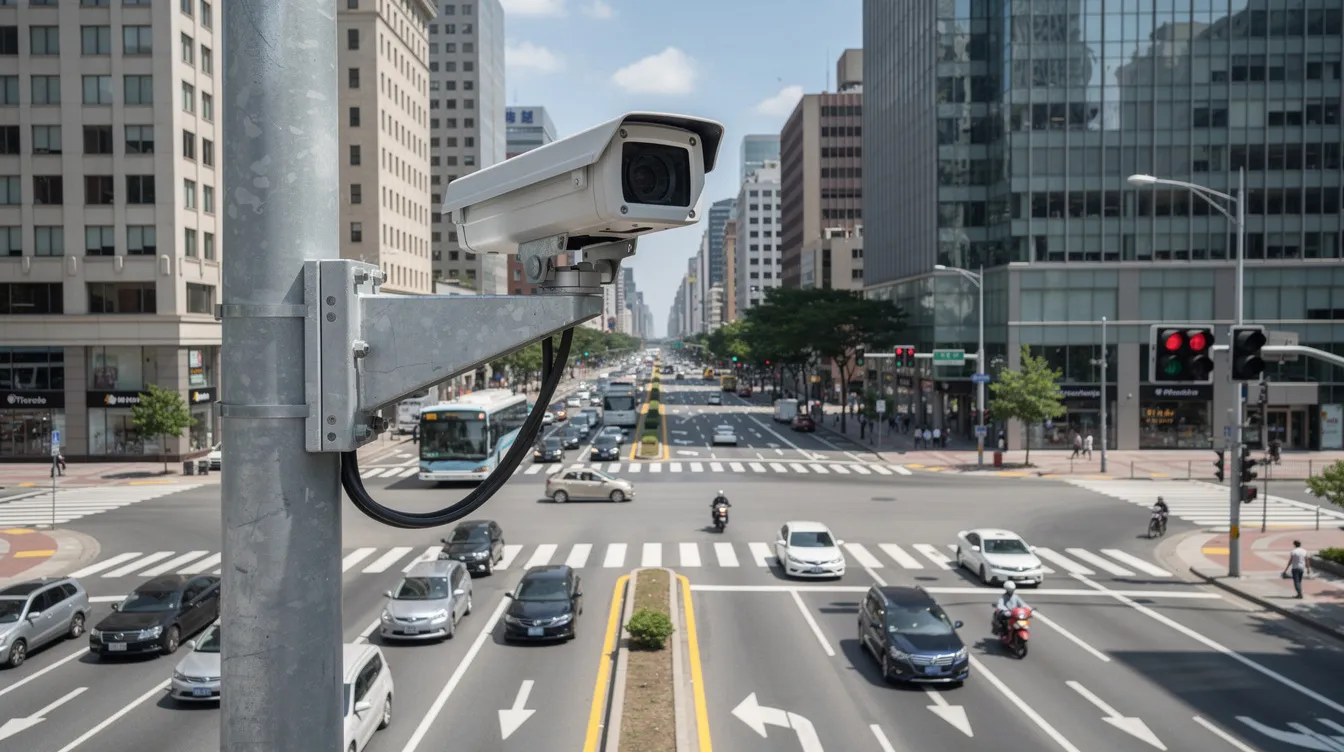
Key Takeaways About Traffic Camera Footage in New Mexico
-
In Albuquerque, the Real Time Crime Center (RTCC) typically keeps traffic camera footage for only about 24 hours before it is automatically overwritten, unless someone specifically requests that the footage be retained.
-
You must act quickly after a car accident to request any available camera footage. Waiting even one day can mean the video evidence is gone permanently.
-
You can submit an Inspection of Public Records Act (IPRA) request online through the City of Albuquerque's portal, but the process is time-sensitive and details matter. A lawyer can handle this and send preservation letters on your behalf.
-
Traffic cameras capture hundreds of thousands of accidents annually across the country, but not every camera records usable footage, and retention periods for traffic camera footage vary by location.
-
After a crash anywhere in New Mexico, call Shekter Rosete Law, PC at (505) 216-2510 or message us online for a free case review and immediate help preserving video evidence.
Can I Get Traffic Camera Footage of My Car Accident in Albuquerque or Anywhere in New Mexico?
Many car accidents in Albuquerque, Rio Rancho, Santa Fe, Las Cruces, and other New Mexico cities occur near traffic cameras, red light cameras, or highway cameras that may have recorded the collision. However, traffic footage is often erased quickly, sometimes within a single day.
Yes, in some cases you can obtain traffic camera footage of your car accident, but only if the cameras were operational, the camera coverage included the accident scene, and the footage has not yet been deleted. There is no guarantee that clear video evidence exists for every crash.
In Albuquerque specifically, the City's Real Time Crime Center (RTCC) normally retains traffic video for roughly 24 hours unless a retention request is made, so same-day action is critical. Outside Albuquerque, camera coverage and retention rules vary. Local authorities such as the New Mexico Department of Transportation, city traffic departments, county governments, and law enforcement agencies each operate their own systems with different procedures.
If you have been in a collision, do not wait. Contact Shekter Rosete Law, PC immediately at (505) 216-2510 so we can move quickly to locate and preserve any available camera footage before it disappears.
How Traffic Camera Footage Works in Albuquerque and New Mexico
The term "traffic camera footage" covers several types of cameras installed along public roadways:
-
Intersection cameras - monitor traffic flow at busy crossings
-
Red light cameras - activate only when a light is violated, capturing still images or short video clips of the violation
-
Highway cameras - typically operated by the department of transportation to monitor congestion on corridors like I-25 and I-40
-
Nearby security cameras - private cameras at storefronts, gas stations, and homes that happen to capture the roadway
Traffic cameras include intersection, red light, and highway cameras, and each type works differently. Some traffic cameras only take snapshots every few seconds rather than recording continuous video. Traffic cameras operated by transportation departments primarily monitor congestion but may record accidents incidentally. Not all traffic cameras record usable accident footage.
In the City of Albuquerque, many cameras feed into the Real Time Crime Center (RTCC) , which can now view approximately 10,000 cameras in real time. However, the system is designed primarily for real-time monitoring, not long-term storage. According to reporting on the RTCC, traffic camera video is often erased within about 24 hours if no request is made to retain it.
Some intersection cameras may not be functioning or recording at all times, which is why it is also important to look for private cameras near major roads like I-40, I-25, Carlisle Blvd, San Mateo Blvd, San Pedro Dr, and Louisiana Blvd.
Outside Albuquerque, footage may be controlled by the New Mexico Department of Transportation , county governments, tribal authorities, or private entities, all of whom may have different retention periods and request procedures. Retention periods for traffic camera footage vary by location, ranging from 24 hours to several weeks depending on the agency.
Insurance companies, law enforcement, accident reconstruction experts, and personal injury attorneys all frequently rely on camera coverage to reconstruct what happened in serious car, motorcycle, and truck accidents.
Why You Must Act Quickly to Obtain Traffic Camera Footage
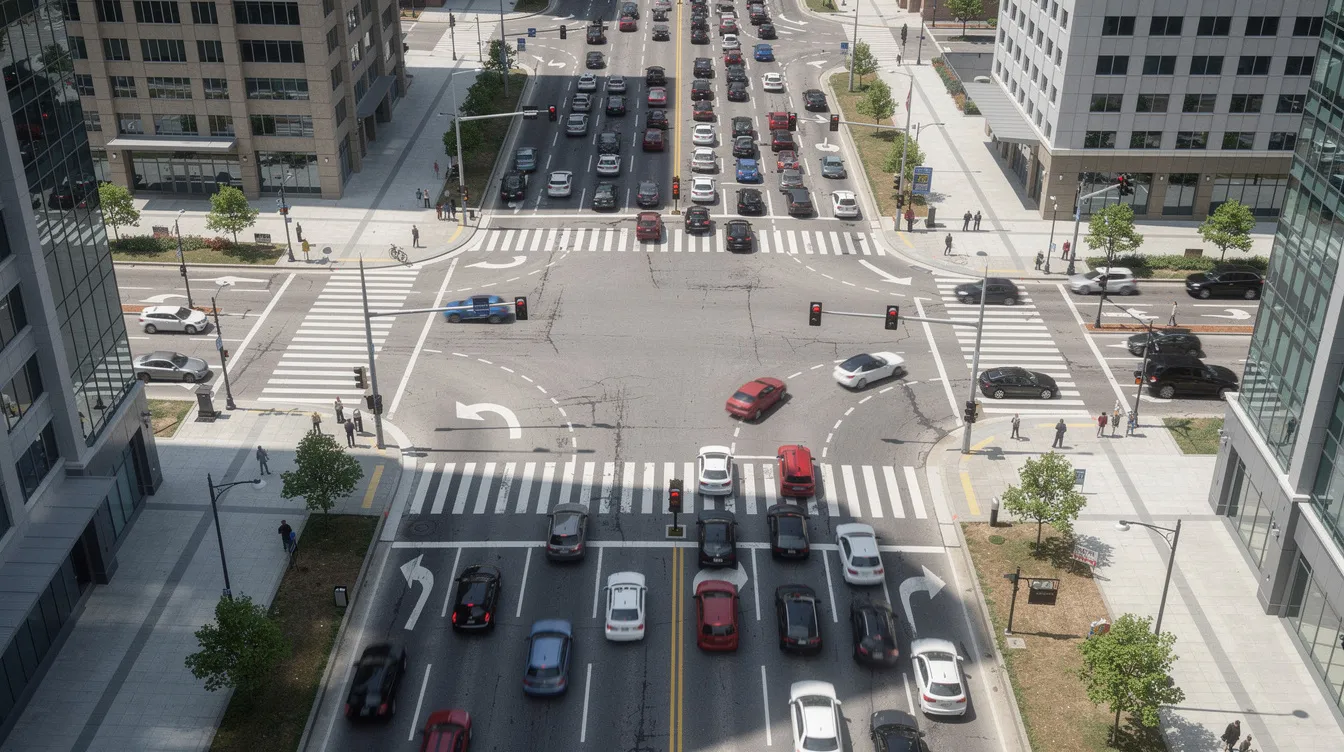
Most traffic camera systems automatically overwrite older video within hours or days due to storage limits. Footage retention varies, and some cameras overwrite data within days or even hours. Waiting even one or two days can destroy crucial evidence that could have proven your case.
In Albuquerque, RTCC traffic video is typically kept for only 24 hours unless they receive an IPRA request asking them to retain the footage for a particular date, time, and location. Traffic camera footage is often deleted within days or weeks, and once overwritten, recovery is nearly impossible.
Some New Mexico government agencies and private camera owners - like gas stations near I-25 or businesses near Central Ave - may keep recordings for 7, 14, or 30 days. Red light cameras and enforcement cameras sometimes retain violation footage for 30 to 90 days. But there is no guarantee, so the safest approach is to act quickly, ideally the same day as the accident occurred.
To protect video files from deletion, sending a Spoliation Letter is advised. These preservation letters can be sent to camera owners to legally demand they preserve the recording. Courts sometimes penalize agencies or businesses that destroy footage after receiving such a demand.
Once footage is overwritten or deleted, it usually cannot be recovered. This can significantly weaken an accident reconstruction or personal injury claim.
Do not let this evidence vanish. Contact Shekter Rosete Law, PC as soon as you are safe after a crash at (505) 216-2510 or via our online contact form so we can immediately send preservation letters and public records requests.
How to Request Albuquerque Traffic Camera Footage Through IPRA
The City of Albuquerque allows the public to request footage through an Inspection of Public Records Act (IPRA) portal. Submitting a public records request is required to obtain traffic camera video from government traffic cameras. But the legal process must be started very quickly after the car accident.
Here is how to submit an IPRA request:
-
Go to the City's online portal. Submitting a formal written request can be done through the City's NextRequest IPRA portal or by email.
-
Provide exact details. Exact details such as location, date, and time are vital for locating camera footage. Include the specific intersection (such as I-40 at Carlisle Blvd or I-25 at Lomas Blvd), the date of the crash, and the precise time.
-
Add identifying information. Include direction of travel, lane, make and color of vehicles involved, license plates if known, and any APD case number or law enforcement incident number. A police report number is often needed to support requests for red light or speed camera footage.
-
Request retention first. Identifying the camera owner is essential for filing a request for footage. The first and most important goal is to request that the footage be retained so it is not deleted while the administrative process plays out. Under New Mexico's IPRA, agencies have up to 15 calendar days to respond, and the footage could be long gone by then without a retention request.
Be aware that authorities may legally deny video requests due to ongoing investigations or privacy concerns. Certain exemptions under IPRA may apply, resulting in partial release or redactions.
If a government agency refuses to release footage, an attorney can issue a subpoena to compel production.
Shekter Rosete Law, PC routinely prepares and submits these requests, tracks responses from the City of Albuquerque, and works with RTCC and other local authorities to secure the recordings when possible.
Other Places to Look for Camera Footage After a New Mexico Car Accident
Even if a city traffic camera did not capture the crash, other cameras near the roadway might have recorded it. A thorough search can make a significant difference in proving fault.
Potential sources of additional video include:
-
Business security cameras - gas stations, restaurants, hotels, and big-box stores often have exterior cameras aimed toward parking lots and adjacent roads
-
Residential doorbell cameras - increasingly common in urban areas, these may capture the exact moment of impact on nearby streets
-
Parking lot cameras - malls and commercial centers near busy intersections
-
School or government building cameras - institutions near crash corridors
-
Dashcam footage - from your own vehicle, the other driver's vehicle, or potential witnesses who stopped to help
Private businesses may have surveillance footage that can provide additional evidence in accidents. However, this footage often has short retention periods, sometimes only 24 to 72 hours, so a rapid on-the-ground investigation is essential to identify owners and request that the video be saved.
A subpoena may be required to obtain footage from private sources if the owner is uncooperative. Rather than personally confronting businesses or property owners, injured people should let their attorney or investigator contact these third parties.
In serious crashes on I-25, I-40, or busy corridors like Central Ave, Montgomery Blvd, and Louisiana Blvd, Shekter Rosete Law, PC may work with accident reconstruction experts to combine traffic camera footage, security video, dashcam footage, and scene photos into a detailed reconstruction of the events leading to the collision.
How Traffic Camera Footage Can Help Your Insurance Claim and Lawsuit
Clear video evidence can transform a disputed car accident case into a straightforward claim by showing exactly what happened in the moments before, during, and after the collision. Traffic cameras capture hundreds of thousands of accidents annually across the country, and in many cases the resulting footage plays a pivotal role in determining liability and compensation.
Here is what camera footage can prove:
|
What Footage Shows |
How It Helps Your Case |
|---|---|
|
Traffic signal status (green, yellow, red light) |
Confirms which driver had the right of way |
|
Speeding or erratic driving |
Shows the other driver violated traffic laws |
|
Vehicle positions at impact |
Establishes fault and direction of impact |
|
Lane changes or failure to yield |
Demonstrates negligent driving behavior |
|
Events leading up to the crash |
Validates your account of the accident |
Traffic camera footage can confirm traffic signal status, show speeding or red-light violations, and confirm vehicle positions at impact. This visual evidence is often the most direct way of proving fault when the other driver disputes what happened.
Insurance companies often deny or minimize car accident claims by arguing shared fault or relying on "he said, she said" disputes. Objective video evidence can cut through these arguments and support fair compensation. Video evidence can significantly influence compensation amounts and improve the outcome of your personal injury claim.
In complex cases like truck accidents , motorcycle crashes, and multi-vehicle pileups on New Mexico highways, attorneys may use footage together with black-box data, skid marks, and medical records as part of a full accident reconstruction.
Shekter Rosete Law, PC uses traffic camera footage in negotiations with insurance adjusters and, when necessary, at trial to show juries the truth about how the collision happened and why the defendant is responsible.
Steps to Take Right After a New Mexico Car Accident (Before You Even Think About Footage)
Protecting your health and safety at the scene always comes before chasing down camera footage. These steps apply to crashes in Albuquerque, Las Cruces, Rio Rancho, Santa Fe, Roswell, Farmington, Hobbs, Taos, and everywhere else in the state.
Immediate actions:
-
Move to safety. If possible, move vehicles and passengers out of active traffic lanes.
-
Check for injuries. Assess yourself and passengers. Call 911 immediately for police and medical assistance.
-
Stay at the scene. Wait for the officer responding to arrive and initiate police reports. This report later helps connect the incident to any camera footage and supports claims with insurance companies.
-
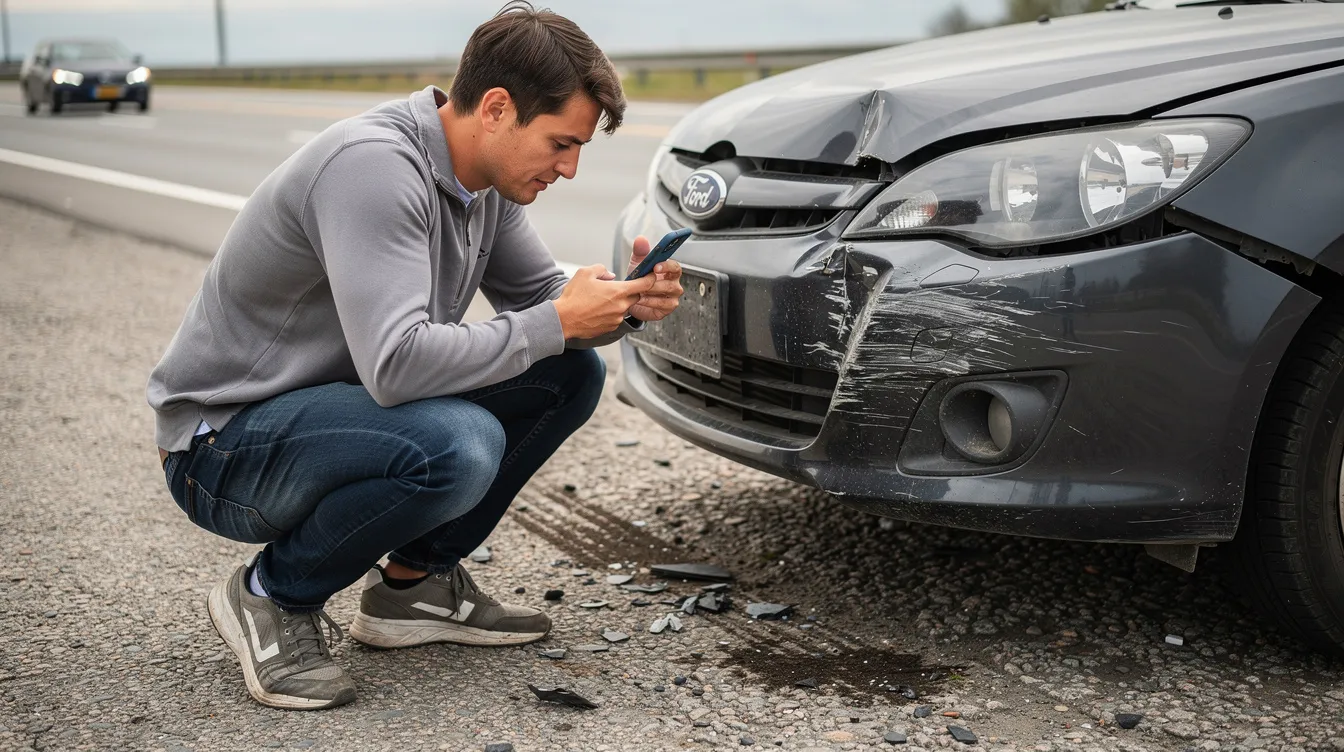
Document everything. If it is safe, take photos and short videos with your phone showing vehicle positions, traffic signals, skid marks, and any visible cameras (traffic poles, business cameras, doorbells) near the crash site.
-
Collect witness information. Get contact details for potential witnesses and ask if anyone has dashcam footage or recorded the scene on their phone.
Once you have addressed safety, call Shekter Rosete Law, PC at (505) 216-2510 as soon as possible so our legal team can start preserving every piece of available evidence. For a more detailed guide, see our page on what to do after a car accident in New Mexico .
How Shekter Rosete Law, PC Helps You Obtain and Use Traffic Camera Footage
Shekter Rosete Law, PC is a trial-focused personal injury firm based in Albuquerque, founded by Jamison Shekter and Mixcoatl "Mish" Miera-Rosete. The firm represents injured people across New Mexico - including Albuquerque, Las Cruces, Rio Rancho, Santa Fe, Roswell, Farmington, Hobbs, and Taos - after car, motorcycle, truck, and other accidents.
The firm handles the entire traffic camera evidence process:
-
Identifying cameras - determining which cameras may have captured the crash, whether operated by RTCC, NMDOT, a city traffic department, or a private business
-
Sending urgent preservation letters - demanding that footage be retained before automatic deletion
-
Filing IPRA and other public records requests - with the correct government agencies, including all necessary details
-
Coordinating with local authorities - working directly with RTCC, law enforcement, and the department of transportation
Jamison Shekter and Mish Miera-Rosete regularly use camera footage to support accident reconstruction, prove fault, challenge inaccurate written reports and police reports, and push back against insurance company denials or lowball offers. The firm also investigates additional video sources and, when needed, issues subpoenas and works with experienced attorneys and accident reconstruction experts to build the strongest possible case.
Schedule a free case review by calling (505) 216-2510 or sending a confidential message through our online contact form . There are no fees unless we recover compensation for you.
When There Is No Traffic Camera Footage: Other Evidence That Can Win Your Case
Many New Mexico roads, including rural highways and some city streets, do not have useful traffic camera coverage. Even in Albuquerque, some cameras are offline, pointed in the wrong direction, or did not capture the crash at the right angle.
A strong claim can still be built without camera footage using other evidence:
-
Police reports and the officer responding's observations
-
Witness statements from people at the scene
-
Photographs and scene documentation
-
Vehicle damage inspections
-
Medical records showing the nature and severity of injuries
-
Cell phone records (proving distraction or speeding via GPS data)
-
Expert accident reconstruction analysis
In serious injury, wrongful death, and nursing home or medical malpractice cases, Shekter Rosete Law, PC frequently relies on medical experts, biomechanical experts, and economists to prove how the crash happened and how it changed the client's life.
The firm also investigates insurance bad faith when insurance companies delay, deny, or underpay legitimate claims, even when the injured person lacks video evidence. You can learn more about the damages you can recover after a car accident on our blog.
If you believe you have "no evidence," still contact us at (505) 216-2510 for a free case review. You may have more proof available than you realize.
Free Case Review for New Mexico Car Accidents Involving Camera Footage
Individuals and families across New Mexico can speak directly with an attorney about traffic camera footage, insurance issues, and their injuries at no cost and with no obligation.
Shekter Rosete Law, PC offers a free legal consultation and works on a contingency fee basis, meaning you pay no attorney's fees unless we secure a settlement or verdict on your behalf.
Whether your crash happened yesterday on I-40 in Albuquerque, last week on I-25 near Las Cruces, or recently in Santa Fe, Roswell, Farmington, Hobbs, Taos, or any other New Mexico community, we are ready to help.
Call Shekter Rosete Law, PC at (505) 216-2510 or send us a secure message online to get answers about camera footage and your legal options today.
Speaking with an experienced attorney quickly can help preserve camera footage, avoid common mistakes with insurance companies, and protect your rights from day one. The footage belongs to whoever operates the camera, and once it is deleted, no one can get it back.

Frequently Asked Questions About Traffic Camera Footage After a New Mexico Car Accident
How long does Albuquerque keep traffic camera footage after a crash?
The City of Albuquerque's Real Time Crime Center (RTCC) typically keeps traffic video for about 24 hours unless a specific request is made asking them to retain footage for a particular date, time, and location. Because of this short window, it is vital to submit an IPRA request and a retention request as soon as possible - ideally the same day as the car accident. Shekter Rosete Law, PC can handle these time-sensitive requests and coordinate with the city to try to secure the footage before it is overwritten.
Can I get traffic camera footage myself, or do I need a lawyer?
In many cases, individuals can technically submit public records requests (like IPRA requests in Albuquerque) on their own. However, the process can be confusing and extremely time-sensitive. A car accident lawyer understands which agency controls the cameras, how to word the request properly, and what deadlines apply. An attorney can also send preservation letters and subpoenas to private camera owners when needed. If you are injured or overwhelmed, let Shekter Rosete Law, PC handle obtaining footage so you can focus on medical care and recovery.
Is traffic camera footage always available for my car accident?
There is no guarantee camera footage exists for every traffic accident. Some locations have no cameras installed, some cameras are not recording at the time the accident occurred, and some recordings may already have been overwritten. Even in urban areas with extensive camera networks, a particular camera may have been pointed in the wrong direction or offline for maintenance. However, a strong case can still be built using other evidence. Contact Shekter Rosete Law, PC for a free consultation to learn what evidence may exist in your particular crash.
Can traffic camera footage be used in court in New Mexico?
Traffic camera footage is often admissible in New Mexico courts and can be powerful evidence in personal injury and wrongful death cases arising from car, truck, or motorcycle accidents. An attorney must obtain the footage properly, authenticate it, and follow the rules of evidence. When clear video evidence exists, judges and juries generally find it highly persuasive because the video shows what actually happened rather than relying solely on conflicting testimony. This is part of what Shekter Rosete Law, PC does when preparing a case for settlement or trial.
What if the video doesn't show the entire crash or is low quality?
Even partial or blurry video can provide useful information. For example, it may show which direction vehicles were traveling, whether a driver ran a red light, or how fast traffic was moving before impact. If you were rear ended and the footage captures even a few seconds before the collision, that can be enough to establish fault. Attorneys and accident reconstruction experts can combine imperfect video with other evidence - like skid marks, vehicle damage, and medical records - to piece together what happened. Do not assume that imperfect footage is worthless. Let an experienced lawyer review it as part of a broader strategy.